
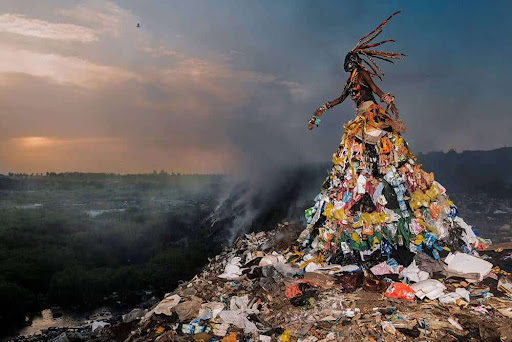
Imagine scrolling past a photo on Instagram, a figure draped in what looks like ocean debris, standing in the middle of a dumpsite, almost like an ancient spirit rising from the waste. It pulls you in. It feels otherworldly. And then you realize everything in the image is real. The trash, the landscape, the warning.
That’s the world of Fabrice Monteiro.
Born to Beninese and Senegalese roots, Monteiro builds mythic characters out of waste collected from polluted places and sets them back into the environment that produced it. The images that feel like folklore mixed with a future we’re not ready to face.
His most famous series, The Prophecy, grew out of one simple, painful observation: the West African landscapes he knew as a child were disappearing under plastic. So instead of documenting the problem the usual way, he asked a different question:
What if nature could speak? And what if she spoke through the very things we’ve thrown away?
He created costumes from fishing nets, scrap metal, plastic bottles — whatever the environment had been forced to swallow. Then he placed these “spirits” in polluted sites, like messengers standing in the aftermath of human choices.
The images are stunning, but they’re also uncomfortable, not because they’re ugly, but because they’re the opposite. They’re beautiful in a way that makes you pause and ask why beauty had to come from damage.
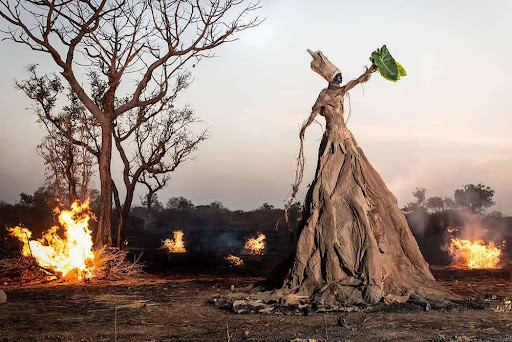
Monteiro’s work hits a nerve because it doesn’t lecture. It simply shows us what we’ve ignored and invites us to imagine what might happen if the earth decided to answer back.
And maybe that’s why his photographs stay with you long after you’ve scrolled past them. They remind you that art doesn’t need a museum to matter. Sometimes, it just needs a moment, that split second where you feel something shift inside you.
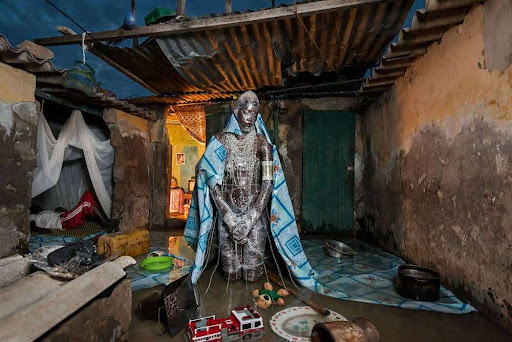
If you’ve never heard of Fabrice Monteiro, this is your sign to look him up. His work isn’t just visually striking; it’s a quiet, powerful conversation about waste, culture, responsibility, and the future we’re shaping.
