
Every February, some brands change their logos. Companies post tributes to Martin Luther King Jr, and other black legends. Schools dust off documentaries. And for 28 days, the shortest month of the year, no less, Black history gets its moment.
Then March arrives. The logos revert, posts stop. And the institutions that spent February celebrating return to business as usual.
So here’s the uncomfortable question: Is Black History Month still serving us? Or has it become a consolation prize – a way for the world to check a box?
The Origin Story Most People Don’t Know
To answer that question, we need to go back to 1926.
Carter G. Woodson wasn’t just a historian. He was the son of formerly enslaved parents. He worked in coal mines as a teenager. He didn’t enter high school until he was 20. And despite all of this, he became the second Black American to earn a PhD from Harvard after W.E.B. Du Bois.
Woodson had witnessed how Black contributions were systematically erased from American history. As he put it: “If a race has no history, it has no worthwhile tradition, it becomes a negligible factor in the thought of the world.”
So he did something about it. In February 1926, he launched Negro History Week, choosing February because it held the birthdays of Abraham Lincoln and Frederick Douglass, dates Black communities were already celebrating.
The goal was never a permanent month of recognition. Woodson viewed it as a corrective – a way to push schools and institutions to teach Black history year-round.
What Went Wrong
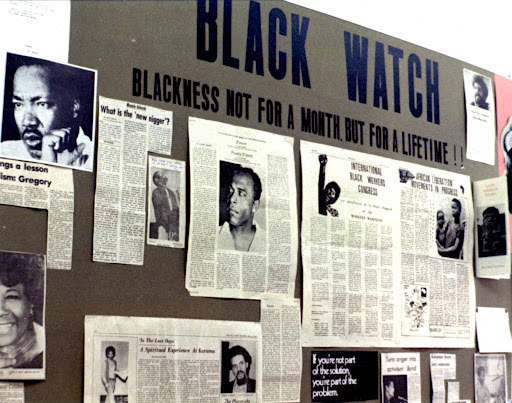
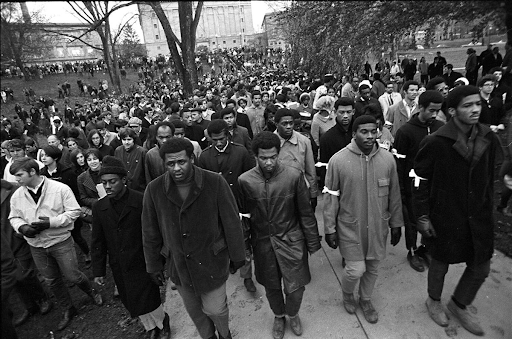
In 1976, Negro History Week officially became Black History Month under President Gerald Ford. By then, the Civil Rights Movement had reshaped American consciousness, and young Black students on college campuses had pushed for a fuller recognition of their history.
But something else happened along the way, which was commercialisation.
Today, Black History Month has become more of a marketing opportunity. Limited-edition products and themed merchandise. Corporations profit from Black culture without reinvesting in Black communities. A logo change doesn’t equal fair hiring practices. A hashtag doesn’t address pay equity.
This is what critics call performative activism – the appearance of solidarity without the substance of change. When Black History Month becomes about optics rather than outcomes, its original purpose is lost.
And truly, one month cannot contain the weight of what is being asked of it. Black history spans continents. It predates the transatlantic slave trade by millennia. It includes ancient kingdoms, scientific innovations, revolutionary movements, and cultural traditions that have shaped the entire world. You cannot fit that into 28 days.
As actor Morgan Freeman put it bluntly in 2005: “You’re going to relegate my history to a month? I don’t want a Black History Month. Black history is American history.”
His critique points to a deeper tension that the month can feel like a concession, not a celebration.
Listen to his interview here:
Morgan Freeman on Black History Month
A View From the Continent
Black History Month is primarily a Western phenomenon.
It originated in the United States. It’s observed in February in the U.S. and Canada, and in October in the UK. But on the African continent, it’s barely a thing.
Across major African cities, you won’t find Black History Month programming in every school and shopping centre. Most commemorations happen at U.S. embassies or American studies centres, not as a grassroots African initiative.
Why?
Some argue it’s because the month was born during a time when Africa was still under colonial rule, disconnected from the diaspora. Others say Africans don’t need a designated month to remember their own history; it’s woven into daily life, education, and culture.
But there’s also a growing perspective that the month could be valuable for the continent. As Bob Wekesa, Deputy Director of the African Centre for the Study of the United States, has noted: “The progenitors of Black History Month sought to advance their identity as Africans by remembering their cultural heritage. This link to colonial and pre-colonial Africa is beneficial to Africans who are equally desirous of reconnecting with their past.”
For Africans on the continent, Black History Month could be more than an imported American tradition. It could be a bridge; a way to strengthen Pan-African connections and reclaim narratives that colonialism tried to erase.
Because Africa’s history didn’t begin with slavery or colonialism. The continent is home to the oldest human civilisations, the first universities, and innovations in mathematics, architecture, and medicine that shaped the world. African history is global history.
The question is whether Black History Month, as it currently exists, honours that legacy or reduces it.
The Tokenism Problem
Black professionals are asked to speak on panels. Black creatives are invited to events. Black stories are suddenly valued. And too often, these contributions are expected for free or for exposure.
The irony should be obvious. A month meant to address historical injustice becomes another example of it: Black expertise being extracted sometimes without adequate compensation.
Meanwhile, companies that post Black History Month tributes may have no Black people in their leadership. Organisations that host celebratory events may do nothing about the systemic barriers their Black employees face the other 11 months of the year.
This is more of a performance.
Tokenism is actually an underpinning of systemic oppression, functioning to maintain the status quo even though it appears to look like progress.
When Black History Month becomes a checkbox rather than a catalyst, it does fail everyone.
So, Where Do We Go From Here?
None of this means Black History Month should be abandoned. But it does mean we need to think more carefully about what we want from it and what we’re willing to demand.
Beyond February: if black history only matters one month a year, it doesn’t really matter at all. The real measure isn’t what happens in February, it’s what happens in July, October, or every month when there’s no marketing campaign pushing for attention.
Beyond trauma: black history is more than slavery and struggle. It includes triumph, innovation, and joy. It includes queens and scientists and artists and philosophers. Centering only pain flattens the full humanity of Black experience.
Beyond the West: before the diaspora, there was the African continent. Before the struggle for civil rights in America, there were liberation movements across Africa. These stories are connected.
Beyond performance: if an institution only celebrates Black culture in February but does nothing about representation or inclusion the rest of the year, that’s not solidarity. That’s theatre.
Carter G. Woodson created Negro History Week because Black contributions were being erased. He wanted a corrective – not a replacement for year-round education, but a push toward it.
Almost 100 years later, that push is still needed.
The uncomfortable truth is that Black History Month can be both: a celebration and a consolation prize. It depends entirely on who’s observing it and why.
For those who use the month as a springboard to learn, to advocate, to make lasting change, it still has power.
But are we still truly making Black History Month Important?



Don’t miss a thing! Sign up to get new content sent directly to your inbox.