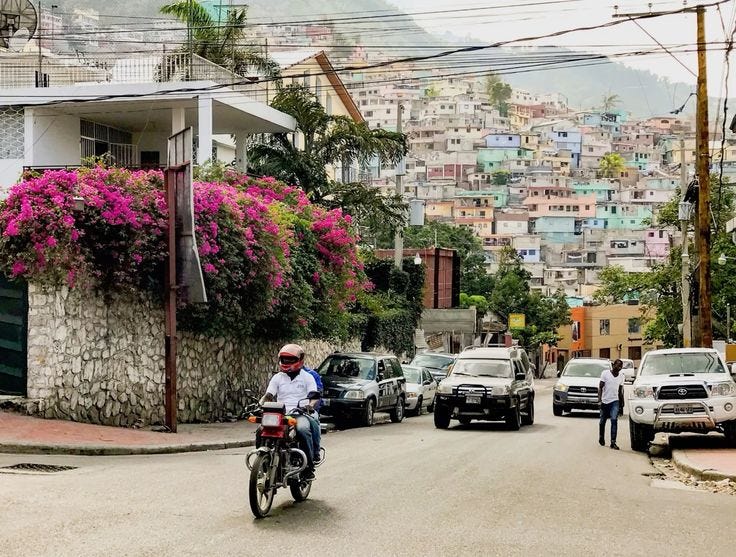
Imagine gaining independence after a revolution, only to find the powers around you still saw your freedom as a threat. That was Haiti’s position in 1804, when formerly enslaved people established the world’s 2nd independent Black republic after defeating French colonial forces. In the mountains of northern Haiti, revolutionary leaders answered the fear of invasion with an enormous fortress, the Citadelle Laferrière. Its high walls, ammunition stores, and commanding position were meant to make another conquest difficult. Today, visitors can marvel at the scale of the building, but admiration alone misses the tension at the center of its story. The Citadelle stands for a revolutionary determination to survive, and it also asks what sacrifices a new nation made when security became an overriding concern.
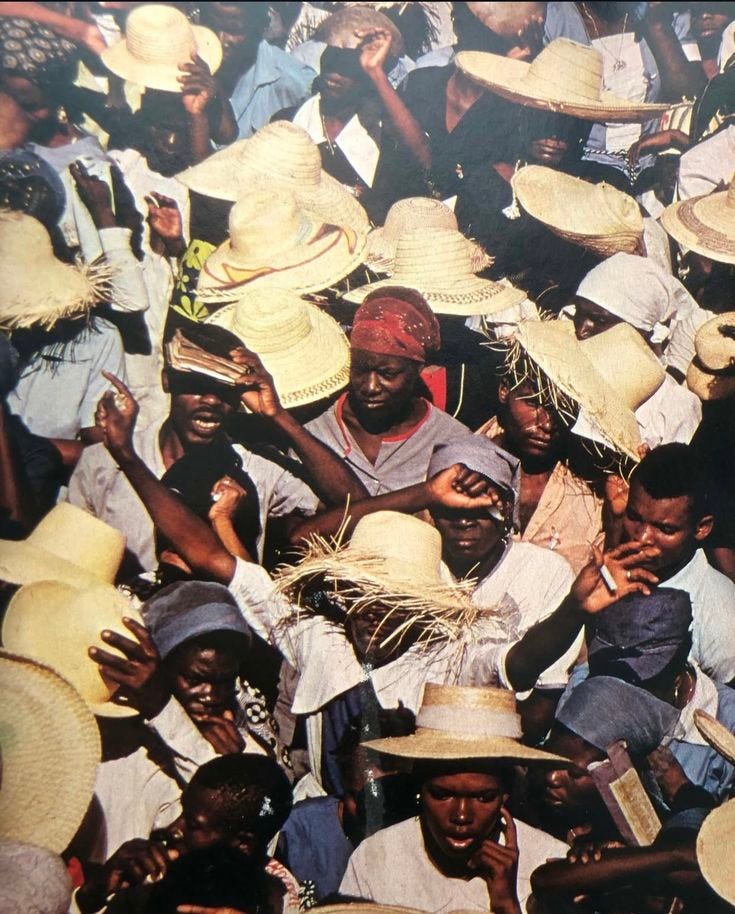
Haiti’s revolution had overturned one of the Atlantic world’s richest slave societies and confronted the international order that protected from its existence. Following the declaration of independence, Jean- Jacques Dessalines tasked his general Henri Christophe with the construction of a great fortress at Pic Laferrière. UNESCO’s nomination for the National Historic Park places that decision directly within a strategy of inland defense. The citadel’s mountainous position departed from the colonial coastal fortifications designed for Atlantic power. The new state was preparing to protect itself on ground chosen for its own strategic purposes.
The fortress was formidable in its engineering, reflecting the military anxieties of a republic that feared renewed invasion. The UNESCO record describes artillery positions, reservoirs, cisterns, military accommodation and defensive walls adapted to the terrain. The fortress could shelter a substantial garrison and function during siege. Such details matter because they reveal a practical intelligence that goes beyond symbolism: engineering translated a revolutionary political claim into something that soldiers could occupy and defend. A nation that had fought to end enslavement was investing labor and resources in the possibility that its former masters might return.
The placement of the Citadelle within a mountainous defensive setting expresses the specific fears of the early Haitian state, whose leaders understood that victory over the French expedition did not guarantee acceptance by the wider Atlantic order. At the same time, the project reveals how public architecture can make political authority visible through the mobilization of workers and resources. Its history is therefore inseparable from the question of whose labor a newly sovereign government could command and the difficult choices involved in building institutions after the destruction of the plantation regime.
The Battle of Vertières on 18 November 1803 provides a precise historical point from which to understand the Citadelle. Victory over the French expedition helped clear the path for Haiti’s declaration of independence on 1 January 1804. UNESCO’s history of the National History Park records that Jean-Jacques Dessalines subsequently entrusted Henri Christophe with constructing the northern fortress and identifies Haitian Henry Barré as its designer. The Citadelle was intended to answer a strategic question that the new country could not ignore: how could the formerly enslaved defend the freedom they had won against the prospect of foreign invasion? Its engineering translated a military and political problem into the position of walls, batteries, and roads.
Yet the story cannot be told as a simple monument to uncomplicated liberty. After Dessalines was killed in 1806, Haiti divided politically, and Christophe eventually declared himself king in the north in 1811. The citadel became associated with his monarchy, while Sans-Souci Palace served as a court and administrative center. UNESCO’s detailed account describes ministries, barracks, workshops, stables, a mint and ceremonial grounds within the larger complex. The palace expressed sovereign ambition through architectural grandeur, but it also made visible the concentration of authority under a ruler whose governance could be severe.
The contradiction becomes essential when the fortress is examined alongside the political institutions that controlled its construction. The labor that built the fortress and royal buildings was organized within a new society still struggling over how freedom would be practiced and who would control its benefits. Recognizing the achievements of Haitian military engineering does not require idealizing royal power. The structures embody both a successful assertion of Black statehood and the difficult politics of building a post- slavery order. Historical maturity begins when a monument can contain conflicting truths without losing its importance.
The ruins also challenge the division between African diaspora history and architectural history. Discussions of the Haitian Revolution often concentrate on military leaders, constitutional milestones and the abolition of slavery. The built environment reveals another dimension: newly free people could organize and defend territory according to their own political needs, drawing on building skills, state administration and available materials. The Citadelle and Sans-Souci belonged to the language of power in the Atlantic world, yet their purposes were inseparable from the unprecedented sovereignty of a nation created through a revolt against slavery.
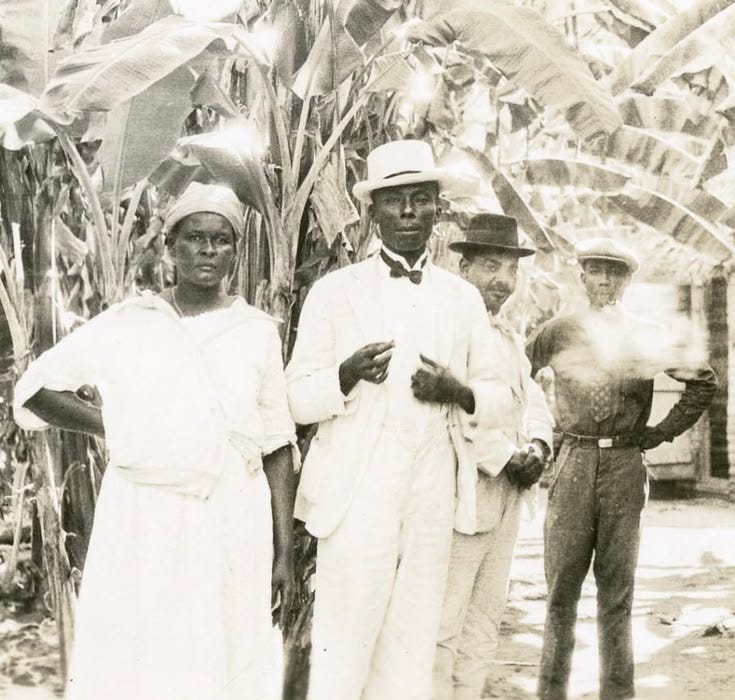
The National History Park was added to UNESCO’s World Heritage List in 1982, and its significance today extends into the politics of conservation. Weather, natural disasters, resources and public access affect the future of the site, while global representations of Haiti can make its architectural achievements less visible than its crises. An image of the citadel offers a counterpoint, but admiration alone is insufficient. The history requires attention to the revolution that preceded construction, the people whose labor gave the buildings form, and the contested government that used them.
The Citadelle remains an imposing declaration that Haitian sovereignty would be defended, but its story also contains the struggle over who would exercise authority within the newly independent state. That tension gives the building its exceptional historical force, connecting the extraordinary engineering of formerly enslaved people with the unfinished political work of emancipation. Haiti’s fortress preserves the ambitions and contradictions of a revolutionary generation, reminding us that liberty requires both protection against outside domination and accountability to the people in whose name it is defended.
For people fleeing slavery in colonial Brazil, reaching a place beyond a plantation was the beginning of a struggle, not the end of it. Families needed fields to grow food, neighbors they could trust, and territory they could defend if slaveholders came searching. Across Brazil, communities known as quilombos developed different ways of building that freedom, sometimes lasting for generations in the face of violent pursuit. Palmares, associated with the resistance leader Zumbi, became the best-known example, yet the lives of ordinary residents were sustained through farming, trade, family ties, and collective decisions. Brazil abolished slavery in 1888, but the history of quilombos challenges the idea that freedom can be measured by a date on a law. Land was one of the things that made independence possible, and disputes over quilombola territory remain part of that unfinished story.
Quilombos emerged in different periods and circumstances, and historians caution against treating them as a single kind of settlement. Some formed through escape from slavery; other communities were shaped by kinship, labor arrangements and the generations that followed abolition. Historian Flávio Gomes, writing for UNESCO in 2024, places quilombos within a larger Atlantic history of maroon communities, including palenques in parts of Spanish America and similar formations in the Caribbean. The comparison reveals the shared pressures of plantation systems, but it should never erase the distinct institutions and local histories that each community developed.
Brazil’s most famous example, Palmares, has often been presented through the figure of Zumbi, whose resistance became a national symbol. That familiar narrative is important, yet a history centered exclusively on heroic leaders risks obscuring the everyday political work of community survival. Settlements required agriculture, defense, trade, social relationships, and negotiations with neighboring populations. The decisions that sustained autonomy could be as consequential as battles. Freedom was made durable through the organization of land and labor across time.
The story of quilombos becomes clearer when the stories of individual leaders are connected to the work of maintaining communities across time. Food production, household organization, local trade, and relationships with neighboring populations all formed part of the conditions of survival, alongside the defense of territory against violence. The prominence of Zumbi in public remembrance can help make resistance visible, but the collective work through which people sustained autonomy deserves equal attention. Without that wider perspective, the history risks becoming a celebration of heroic defiance that neglects the material demands of everyday freedom.
The annual commemoration on 20 November makes this history particularly visible in Brazil. The date recalls the killing of Zumbi dos Palmares in 1695 and is recognized nationally as the Day of Zumbi and Black Consciousness; Brazil made the date a national holiday through legislation enacted in 2023. The modern struggle for quilombola land is not identical to the history of Palmares, but the connection is politically meaningful. Article 68 of the transitional provisions of Brazil’s 1988 Constitution recognizes definitive ownership for communities descended from quilombos occupying their lands and requires the state to issue titles. Reading the historical and constitutional records together reveals why the geography of refuge still matters within public disputes over land, citizenship and inherited inequality.
The constitutional and documentary record shows that struggles over territory continued into the democratic period, when recognition of quilombola communities became a question of enforceable rights. Article 68 of the transitional provisions of Brazil’s 1988 Constitution recognizes definitive property rights for descendants of quilombo communities occupying their lands and requires the state to issue titles. The constitutional language matters because it names an obligation: historical communities are not simply memorial sites that the state may celebrate; they possess claims to territory that public institutions must address. The movement from recognition to secure legal title, however, has remained difficult and often contested.
Gomes documents the pressures that contemporary quilombola communities face, including land grabbing, threats against leaders, and delays in titling. His account also emphasizes the role of historical research and community mobilization in expanding the way the public understands quilombola identity. The relationship between historical autonomy and current land claims requires careful attention to different political and legal conditions. A modern land dispute is not a direct replica of a colonial confrontation, but the question of whether Black communities can exercise secure control over their territories has never disappeared from Brazil’s political life.
The geography of quilombos also complicates how African diaspora culture is represented. Music, religious practices, foodways and collective memory are sometimes extracted from their social settings and circulated as expressions of cultural resilience. Those expressions are meaningful, but they exist within communities that require housing, schools, water, land rights, and political protection. Celebrating Afro- Brazilian the work artists make while ignoring the conditions under which its practitioners live creates a selective appreciation of heritage, one that receives the image but neglects the people.
A 2022 Brazilian census, discussed in UNESCO’s report published in 2024, helped give renewed visibility to the country’s quilombola population. Can numbers influence policy, yet enumeration alone does not settle questions of identity or title. Influence policy, yet enumeration alone does not settle questions of identity or title. The historically significant act is the insistence that communities define their relationships to land through memory, descent and collective life. This is why surviving historical documents, oral histories, territorial maps and contemporary testimony have become essential parts of the research. Each offers a different kind of evidence for a right that cannot be understood through plantation records alone.
The continued struggle for quilombola land rights makes clear that the story of emancipation cannot be closed with the signature of an abolition law. Across generations, communities have defended the material conditions through which families sustain a free life, even as political recognition and legal title have remained uneven. Remembering Palmares and Zumbi gains depth when those histories are connected to present claims for territory, because the most demanding promise of freedom is the possibility of inhabiting it securely.