


A printed picture can travel farther than anyone who first made it imagined. In the nineteenth century, images of a snake charmer circulated through commercial print networks, eventually becoming connected to depictions of Mami Wata, a powerful water spirit whose meanings vary across African communities. The story is fascinating because the printed figure did not simply replace an older belief. People interpreted, adapted, and gave the image new significance within established ideas about beauty, danger, healing, and the spiritual world. Looking closely at this history reveals how images change as they move, especially when those who receive them have their own traditions and purposes. Mami Wata’s visual history is a reminder that cultural influence is never a one-way journey.

A particularly revealing object is the nineteenth-century image of a female snake charmer printed in Hamburg. Research presented by the Fowler Museum at UCLA identifies a chromolithographic poster published around 1887 featuring the performer Maladamatjaute, whose image eventually circulated into West Africa. By 1901, the snake charmer had already been interpreted in the Niger Delta as a water spirit and translated into carved, three-dimensional forms. This movement from commercial print to local religious sculpture is historically documented, and it demonstrates the speed with which an imported picture could enter a creative world that possessed its own established beliefs.
The transformation of the snake-charmer image involved decisions about visual form, spiritual meaning and public reception. A European printed image arrived as a product made for viewers whose cultural expectations differed from those of communities in coastal Africa. Local artists could retain the snake, the body and the pose while changing the picture’s purpose and associations. The motif became part of an encounter with a powerful spiritual presence, expressed through sculpture, masks, altars, paintings and performance. Its authority came from the meanings practitioners attached to it, not from the intentions of the original publisher.
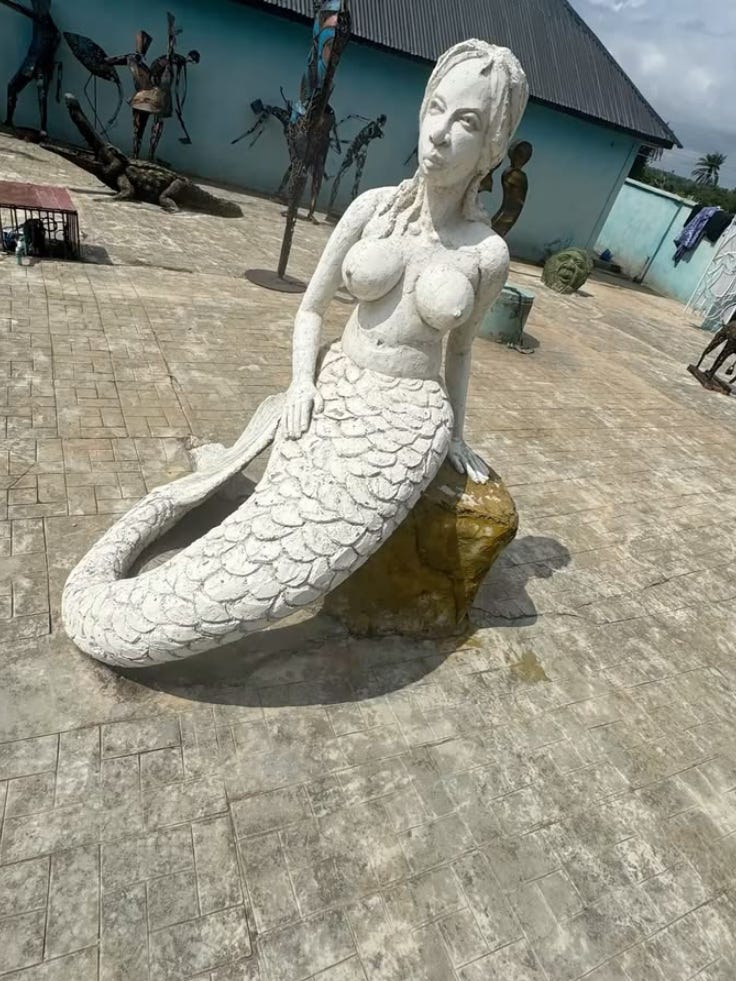
The movement of a printed image across borders is only the first stage of this history, because its meaning is transformed when artists place it within another material and spiritual setting. A chromolithograph originally circulated as commercial entertainment can become a source for a carved devotional figure whose gestures and accessories speak to local understandings of water and spiritual power. The process challenges the idea that authenticity requires visual isolation, but it also warns against treating every figure as identical simply because museums classify them under the same name.
The Smithsonian National Museum of African Art preserves a Mami Wata sculpture associated with Anang Ibibio contexts in southeastern Nigeria. The figure has snakes draped around its body and the long fiber hair characteristic of many representations. The museum’s object history records its purchase in Port Harcourt in 1983 and subsequent donation to the collection. That provenance describes the recent journey of a particular artwork, while its iconography points toward a longer, collectively produced history. Both registers matter: the physical object carries evidence of makers and markets, and the motif carries narratives that cannot be recovered from museum acquisition documents alone.
During the early twentieth century, commercial networks introduced additional visual materials that artists and worshippers could adapt to existing spiritual practices. The Fowler’s research traces the circulation of Indian religious prints, which became meaningful to devotees who interpreted deities and symbols through African water-spirit cosmologies. Devotional images,films and calendars circulated through diasporic commercial networks and influenced the appearance of Mami Wata and related spirits.
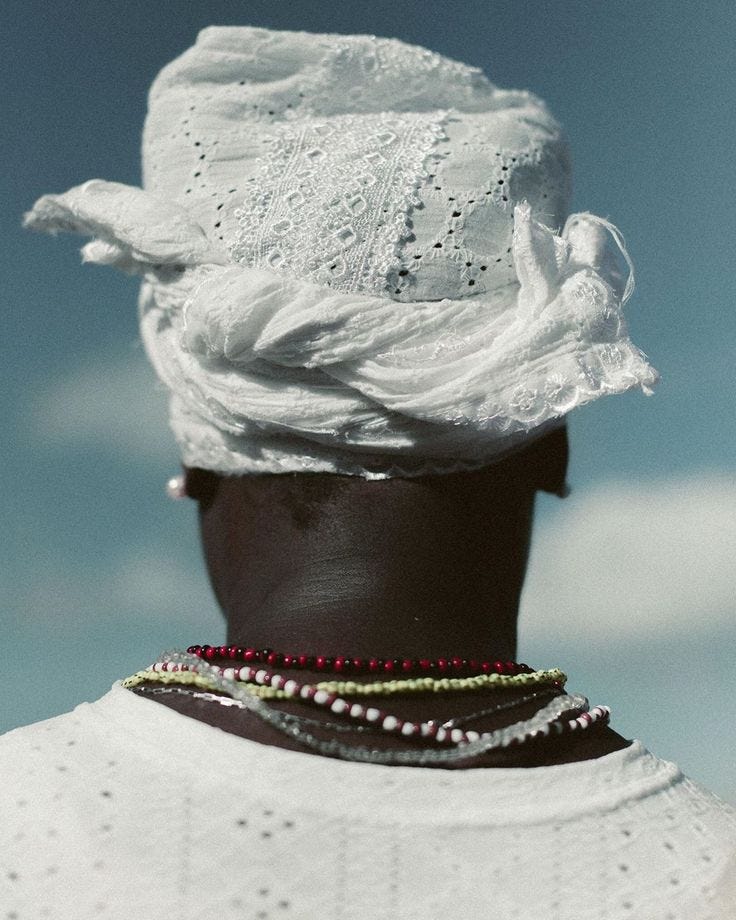
Artists and ritual practitioners actively selected and reinterpreted visual materials as images traveled between commercial and religious contexts. Calling it merely ‘syncretism’ can describe a mixture, but it can leave unexplained the artists and worshippers whose judgments directed the encounter.
Mami Wata’s meanings have also changed with urban life, prosperity and anxiety. The spirit’s association with beauty, luxury and wealth has allowed artists to address the promises and hazards of commercial modernity. In some visual cultures she embodies access to abundance; in others, especially certain contemporary Christian media, she is recast as threatening or demonic. Through these different applications, recognizable elements of the image could remain while its spiritual associations and moral implications changed. This mobility reveals that spiritual imagery participates in contemporary debates about money, sexuality and authority instead of occupying a separate, timeless realm.
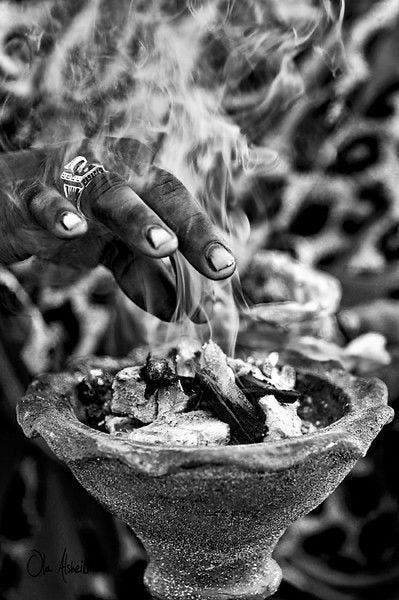
The museum can struggle with this kind of art because the object displayed behind glass is only one element of a larger relationship. A carved figure may have been made for a shrine, a performance, or a set of ritual obligations that shaped how people encountered it. Its colors and accessories could communicate within a particular community of practice. Without that context, viewers may treat the work as an attractive illustration of myth, missing the fact that its meaning was shaped through living action and belief. Ethical interpretation requires collaboration with people who understand those contexts and an acknowledgment of the limits of available records.
Mami Wata’s visual history cannot be reduced to the itinerary of one printed image, because its significance emerges from the communities that transformed pictures into local religious and artistic expression. The snake charmer print offers unusually vivid evidence of this process, while the diversity of devotional forms reveals its continuing possibilities. The tradition demonstrates the authority of African makers to interpret the material they encountered and to create meanings that no original publisher could have anticipated.