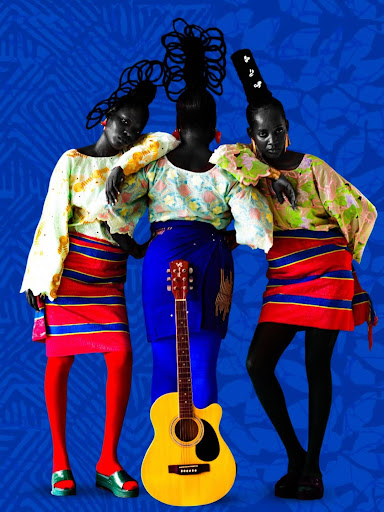

I came across a film recently that I couldn’t stop thinking about. Not in the way a good thriller stays with you, where you’re replaying the twist in your head. More like a bruise you keep pressing because you need to understand why it hurts. The film is called Atlantics, directed by Mati Diop, and it’s set in Dakar, Senegal. It came out in 2019. It won the Grand Prix at Cannes. And somehow, in all the noise of everything else, I’d never watched it until now.
I wish I had sooner. Not because it would have changed anything. But because it puts into images something I’ve been carrying in words for a long time, something a lot of us have.
Everybody wants a better life. The woman selling groundnuts and corn by the roadside in the afternoon heat, she wants a better life. The man mixing cement on a construction site from morning till his hands crack, he wants one too. The nurse pulling double shifts at a hospital with no running water. The graduate who has sent out 200 applications and heard nothing back. The mother who sits down every evening to do the math, rent, school fees, food, transport, and the numbers never add up. They all want a better life. Not a perfect one. Not even a comfortable one. Just better than this.
You work so hard. All day, sometimes deep into the night. You smile when you’re tired. You show up when your body says stop. And you do all of this for the basics. Food. Rent. Transport. Maybe a little left over to send home. And sometimes, after giving everything you have, they still owe you. You ask for your money and they say next week. Next week becomes next month. Next month becomes silence. You fight for it. Nothing. But you keep going, because what else is there?
You pray. Against enemies, against bad luck, against whatever invisible thing seems to hold you in place while the world moves on without you. You stay hopeful. For your family, for the person you love, for yourself most of all. Because if you stop hoping, what’s left?
But somewhere quietly, a thought starts to grow. Maybe it comes at 2 a.m. when the ceiling fan isn’t working, and the heat won’t let you sleep. Maybe it comes when you see your mate post pictures from London or Toronto or Dubai, smiling, clean clothes, a life that looks like it actually works. Maybe it comes the day someone you love gets sick, and you realise you can’t afford the hospital.
At first, the thought is small. Just a whisper. Then it gets louder. Then it’s all you can hear.
I have to find a way out of here.
This is exactly where Atlantics begins. A group of young men in Dakar are building a tower. Tall, modern, shiny, the kind of building that shows up on investment brochures. They built it with their hands. And they haven’t been paid. Not for months. Their boss, a wealthy man who clearly sleeps fine at night, simply doesn’t pay them. He doesn’t have to.
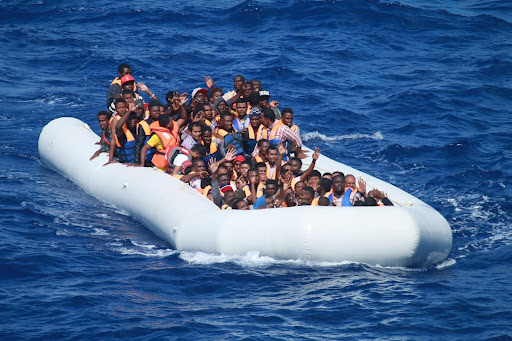
So one night, without warning, without goodbyes, they get on a boat and set out across the Atlantic toward Spain. Toward Europe. Toward the idea that something better must exist on the other side of all that water.
They don’t make it.
I wasn’t ready for that. Not because I didn’t know it was coming, but because of how quietly the film holds it. No dramatic score, no slow motion. Just absence. And the women they left behind, the girlfriends, the lovers, the ones who never got a proper goodbye, were left standing in the silence of a world that just got emptier.
I had to pause here. Because this is not a movie story. This is Tuesday in Lagos. Saturday in Bamako. Any day of the week in Conakry, Asmara, or Dakar itself. It’s been happening for years. For decades. It’s happening right now, somewhere along a coastline, in the back of a truck, in a conversation whispered between two friends who’ve decided they’re done waiting.
The tower in the film is a symbol, but the reality behind it doesn’t need symbolism. Millions of people across this continent build things they’ll never benefit from. You serve the economy, but the economy doesn’t serve you back. You are essential, you are the reason the whole thing stands, but you are treated like you’re replaceable. And when you ask for what you’re owed, you’re told to be patient. To be grateful. To wait.
In Nigeria, they have a word for what comes next. Japa. It means to flee. To run. To escape. And over the past decade, it has become the defining word for an entire generation of Africans who feel they have no choice but to leave. Doctors, nurses, engineers, teachers, developers, people who spent years training in their own country, now packing their bags because the system at home will not give them what they need to survive, let alone thrive.
Nigeria alone has lost over 17,000 medical doctors to the UK, US, Canada, and Germany. In one year, Nigerians spent over a billion dollars on medical tourism, flying abroad to be treated by doctors who used to live down the road, because there aren’t enough left at home. The people who could help are gone. Staying was no longer an option.
But it’s not just Nigeria. It’s Mali, where political instability under military rule pushed more of its citizens toward European shores than any other African country in 2024. It’s Guinea, which held that same unwanted title the year before. It’s Eritrea, Sudan, Senegal, Somalia, and so many more. It’s wherever poverty, conflict, terrorism, poor governance, and a shrinking future meet, and staying starts to feel like its own kind of death.
And the ocean isn’t the only thing that kills.
The Sahara kills too. Quietly, far from any camera. Experts believe twice as many people die crossing the desert than the Mediterranean, but we’ll never know the real number because the sand covers what it takes. People die of thirst, of heat, or of falling from overcrowded trucks that don’t stop. Smugglers abandon them when vehicles break down. Their bodies lie in the open until the wind buries them, and nobody ever comes looking.
Then there’s Libya, sitting between the desert and the sea, where migrants have been bought and sold in actual slave markets. Not a century ago. Now.
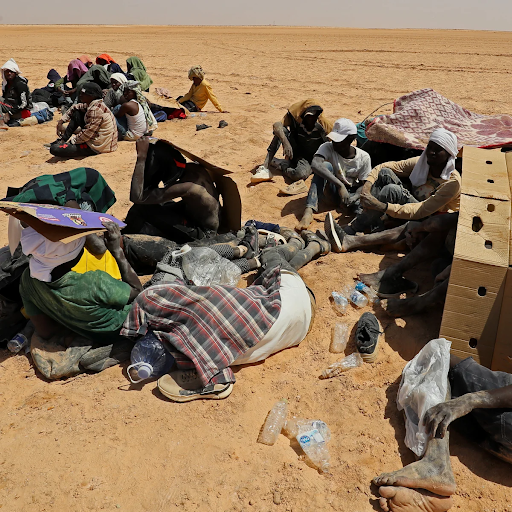
People held in detention centres, beaten, starved, forced to call their families for ransom while their captors hit them so their mothers can hear them scream on the phone.
And for women and girls, the cruelty takes a specific shape. An estimated 80 percent of Nigerian women who survive the crossing to Italy end up coerced into prostitution. Many left home believing they were going to real jobs, salon work, domestic help, something that would let them send money back. Instead, they arrive owing tens of thousands to traffickers, with no papers, no language, no way out. Some were sold by people they trusted. The promise of a better life, weaponised.
For the ones who make it, who survive the desert, the sea, the traffickers, the story doesn’t suddenly become easy. It just becomes a different kind of hard.
You arrive somewhere nobody knows your name. Your degree doesn’t count. The loneliness sits in your chest, heavy, every single day. You work three or four jobs. You fall asleep on the bus because it’s the only rest your body gets. You share a room with four other people because rent in these cities was not built for people like you.
And after tax, after rent, after transport, you scrape together what’s left and send it home. Because your mother is waiting. Your sister’s school fees are due. Your father needs medication. The whole reason you left is standing on the other end of a WhatsApp call asking how you’re doing, and you say “I’m fine” because what else can you say?
You carry two lives at once. Some days, the weight of both is almost too much.
In Atlantics, the spirits of the lost workers come back. Not as horror. As longing. They possess the living to demand their unpaid wages, to reach for the people they loved one last time. It’s supernatural, yes. But it’s the truest thing in the whole film. Because anyone who has lost someone to migration, especially the kind with no arrival, no phone call, no body, knows that the missing don’t really leave. They linger. In the empty chair at the table. In the silence where a voice used to be. In the way a mother pauses mid-sentence sometimes, caught in a memory she can’t finish.
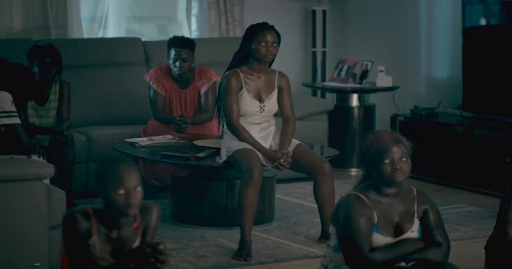
For every person who gets on a boat or climbs into the back of a truck, there is someone at home who doesn’t sleep well anymore. A wife who doesn’t know if she’s a wife or a widow. A child who asks questions nobody can answer.
And the communities feel it everywhere. When doctors leave, hospital queues get longer and people die from things that shouldn’t kill anyone. When teachers leave, classrooms swell and education thins out. When engineers and builders and thinkers leave, the infrastructure of progress weakens from the inside. Migration doesn’t just move people. It hollows out the places they leave.
Politically, brain drain does something quieter than it sounds. Governments lose the very citizens who might have pushed for change, the educated, the frustrated, the ones who would have demanded better. When the most capable people leave, the pressure on broken systems eases, and those in power breathe a little easier. Brain drain doesn’t just weaken a country’s workforce. It weakens its democracy.
Economically, it’s a strange paradox. African migrants abroad sent home roughly $95 billion in remittances in 2022, more than the continent receives in foreign aid. That money keeps families fed, keeps children in school, keeps small economies breathing. But it also means countries survive by exporting their own people. A nation that spent a decade training a doctor watches that doctor earn abroad and send scraps home. Grateful for the scraps. Heartbroken by the arrangement.
And then there’s culture, the quietest loss, the one that takes a generation to notice. When young people leave en masse they carry their languages with them, their traditions, their way of being in the world. Children in the diaspora grow up between two cultures, fluent in neither fully, translating themselves in every room they enter. The festivals get smaller back home. The family compounds thin out. The elders tell stories to fewer listeners. It’s not that culture dies. It just becomes something you have to fight harder to hold onto.
This isn’t new either. Africa has been shaped by migration for centuries. The transatlantic slave trade ripped millions from the continent and scattered them across the Americas. Colonial labour systems moved people like cargo. Post-independence waves sent students and professionals searching for what home couldn’t yet provide. Each wave left its mark: jazz, blues, samba, reggae, hip-hop, all born from African rhythms carried across water by people who were never meant to survive, let alone create. The resilience is extraordinary. The loss underneath it is immense.
What’s happening now is a continuation of that story. Different boats, different borders, different reasons, but the same truth. When a place fails its people, its people will move, and the place will never be quite the same again.
Mati Diop said something in an interview that stopped me. She talked about meeting young men in Dakar who were physically in front of her, flesh and blood, breathing, but who were already gone. So consumed by the idea of leaving that they had stopped being present in their own lives. She called them a ghost generation.
That phrase hasn’t left me. Africa has the youngest population on earth. The median age across the continent is around 19. These are people with energy, talent, ambition, ideas, people who, given half a chance, would build extraordinary things right where they are. And when the best option they can see is to risk everything, sometimes their actual lives, for a chance at a future where their effort leads somewhere, something is deeply broken.
About 35 percent of people in Sub-Saharan Africa live in poverty. Youth unemployment in many countries is staggering. In 2024 alone, over 19 million new displacements from conflict and disaster. The systems that should protect people are the same ones that fail them, exploit them, forget them.
Here’s the thing the world keeps getting wrong about all of this. Nobody wants to leave. People want to stay. They want to build lives where they are, close to the people they love, in the culture that raised them, eating their mother’s cooking, speaking their own language without having to translate themselves for anyone. Nobody gets on a boat in the middle of the night because they want an adventure. They do it because every other door has been shut. Because the tower they built doesn’t have a room for them. Because the money they’re owed isn’t coming. Because the prayers haven’t been answered yet and the body is tired and the spirit is running out of patience.
Migration, for most people, is not the dream. It’s what happens when the dream dies at home.
And yet the global conversation so often frames migrants as the problem. As invaders. As a burden. As people who want to take something that doesn’t belong to them. When the truth is, most of them just want what anyone wants. To work. To be paid fairly. To feel safe. To have a future worth waking up for.
I sat with the film for a long time after it ended. Not because it gave me answers but because it held something I recognised. That feeling of loving a place that doesn’t love you back enough to let you stay. Of watching people you know make impossible calculations with their lives. Of carrying the names of people the world has already forgotten.
Somewhere tonight, along the West African coast, at a truck stop in the Sahara, in a holding room in Tripoli, in a shared flat in East London where someone is setting their alarm for 4 a.m. again, someone is making a decision. Not because they want to. Because they feel like they have to.
The world calls them migrants. Statistics. A crisis. An issue to be managed.
But they have names.




Don’t miss a thing! Sign up to get new content sent directly to your inbox.