
Written by: Dumebi Favour Ezekeke
Everyone knows the story of Jack and Rose. A love story that started on the Titanic and ended shortly after it began because the ship hit an iceberg and Jack did not make it. Even if you do not know the story, you might be able to sing the signature Celine Dion song attached to it or you might have heard about the Titanic. But do you know that at the start of the 21st century, Africa had a maritime disaster twice as deadly as the Titanic? It happened in Senegal on a ferry called Le Joola. The difference between both shipwrecks, however, is that while the Titanic carried the wealthiest and most esteemed passengers, Le Joola carried regular people. Traders. University Students. An entire soccer team. Children, trying to move from Ziguinchor to Dakar to satisfy immediate needs.
While the Titanic has been immortalized through films, movies, documentaries and endless retellings. The story of Le Joola is present in the minds of only a few. Retold by the survivors but not on a wide scale. This article revisits the Le Joola tragedy that happened on the quiet night of September 26, 2002, the systemic failures that led to the tragedy and why it is important to carry stories like this in memory.
Le Joola Ship Origins
For people who made the journey everyday, navigating the River Gambia to get to Dakar, was just a part of life. Like someone living in the streets of Venice, who thinks nothing of boarding a gondola to get to the market, these people treated these crossings as normal. But, from the outside, looking in, the route was anything but simple. Two international borders, a winding river and the politics of a small nation happening in a single passage through and fro the river. Also, by virtue of how risky or expensive the other options were, it was the only option available to the average man. The Casamance, almost separated from the rest of Senegal by the tiny state of The Gambia, had since 1982 been wracked by a separatist rebellion. September 2002 saw a surge in attacks. Due to these attacks, the roads through northern Casamance and the Gambia were risky at that time. Going through the Gambia also took a minimum of two days. Flights were available but they were too expensive for regular people.
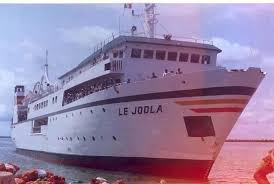
It was to solve the problem of logistics that the Joola ferry began operating for civilians, carrying passengers, vehicles and goods between Ziguinchor; the capital of Casamance and Dakar along the Gambia border. When it first set sail, it was the bridge that connected the small town to the outside world. A regular day on board was the perfect picture of everyday lives in Senegal. Traders carrying or going to buy goods from Dakar. Students travelling to Cheik Anta Diop University. Families going or returning home. Sometimes, the ferry even had soldiers and supplies transporting themselves due to the ongoing conflict in Casamance. The ferry brought together people from all walks of life. It was also named after the Jola people. The main ethnic group in Casamance, who were a minority in Senegal at large. Occupying only about 4% of the state’s total population, as opposed to the Wolof’s 43%. Regardless of their small numbers, they are known for fiercely guarding their cultures and traditions. They were also the last people to accept either Islam or Christianity. Till this day, some members of the tribe still maintain strong beliefs centered around a supreme being called Emit or Ata Emit. Staying true to its name, the Joola was not just any ferry. Built in Germany for Senegal, originally for the armed forces, she was 79.5 meters long, weighed 2,087 tons, and had capacity for 44 crew members, 536 passengers, and 35 cars. She was designed to move through both rivers and the Atlantic coast, able to navigate the shallow waters of Casamance as well as the 150-mile stretch of open sea between ports. But her flat-bottom hull and shallow draft made her stability at sea precarious, especially when the ferry was overloaded. She to it’s properties, the Joola was not meant to last more than six hours away from shore. In practice, she was operated by the military and not subject to the usual maritime regulations, leaving the passengers unaware of the risks they faced every day.
The Joola Shipwreck
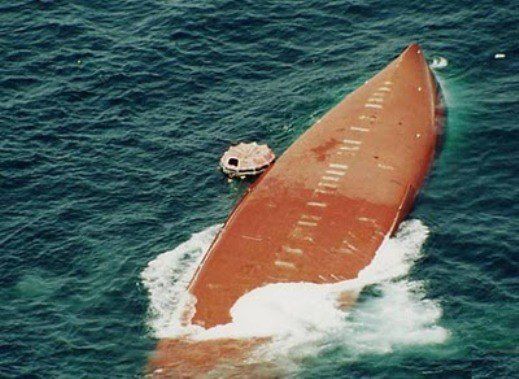
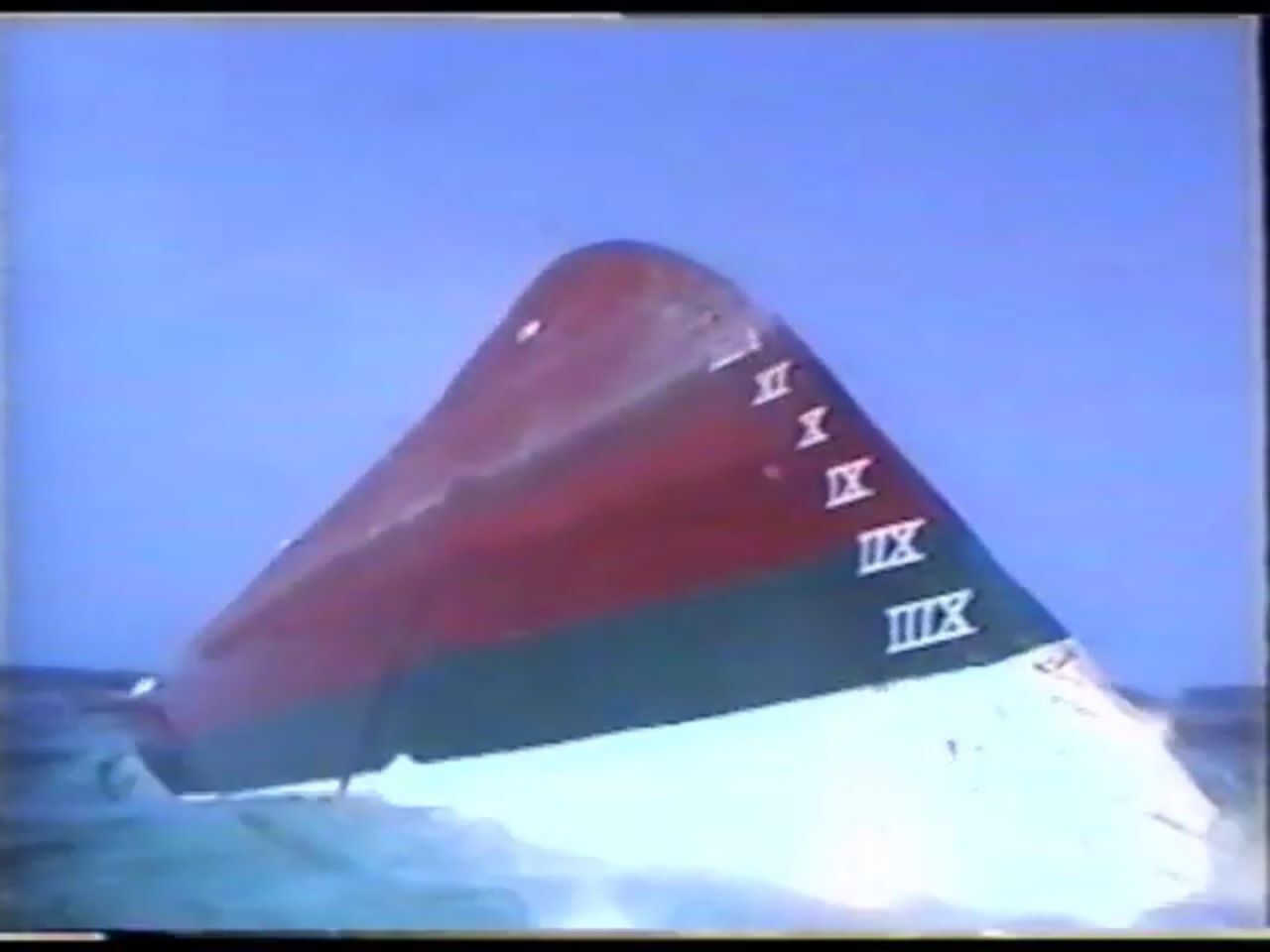
On the night of September 26, 2002, the Joola departed Ziguinchor for Dakar under ordinary circumstances. There was no announcement of danger. No warning that this journey could be different. The ferry was overcrowded by four times its original capacity and, before it began to move, rain started falling. Passengers were told to go below deck. As the ferry sailed along the coast, the weather worsened. Strong winds and heavy waves hit a ship already struggling under excess weight. With passengers concentrated below deck and vehicles above, the balance of the ferry shifted. Sometime after midnight, the Joola capsized.
It did not sink immediately. For hours, the overturned ship remained partially afloat. Some passengers climbed onto the exposed hull. Others clung to debris, hoping help would come. In that time, survival was still possible. Survival was still possible till morning. But, the national response was slow. It was the local fishermen who used pirogues to pull out survivors and bodies from the ferry. In the end, there were at least 1,863 deaths. 444 of which were children. Till this day, some bodies are yet to be recovered from the ship. The survivors of the tragedy would later say that it was not just the capsized ship that took the lives of the victims but the delayed response. A lot more people would’ve survived if there had been a little bit more effort to save lives.
Why this tragedy should be remembered.
The Joola shipwreck is the second deadliest maritime disaster in peacetime. It claimed more lives than the Titanic, yet it is barely spoken of. Families of the victims say they cannot grieve because the bodies were never recovered. The ship itself remains where it sank. In 2005, the European Union gave the Senegalese government funds to recover it, but nothing was done. No official memorials mark the loss. Without the voices of the families, it would be as if the disaster never happened.
In Dakar, the Place du Souvenir stands as the central memorial, quietly marking the tragedy along the main Route de la Corniche Ouest. A few kilometers away, toward Yoff, the African Renaissance Monument rises, a 49-meter bronze statue built for $27 million under President Abdoulaye Wade in 2010 and constructed by a North Korean company. The tallest statue in Africa, it was unveiled in front of nineteen heads of state as a symbol of Africa’s arrival in the twenty-first century. Critics argue that if the country is capable of erecting a monument of that scale, with that level of funding, what stopped the government from giving the Place du Souvenir or the victims of the Joola a proper remembrance? Or at least providing some support or compensation to the families?
While families continue to fight for recognition of a disaster of this scale, it raises a painful question: what is the value of African life if tragedies like this are ignored? And if we allow them to be forgotten, how many more will disappear without a trace?



Don’t miss a thing! Sign up to get new content sent directly to your inbox.