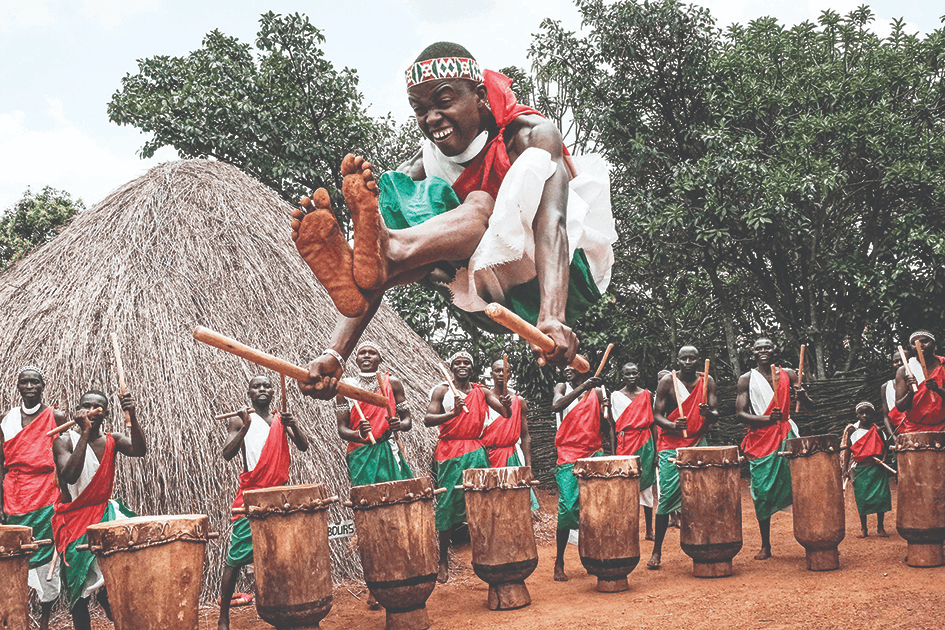

The Royal Drummers of Burundi, known locally as Abatimbo, are living vessels of history. Their drumming carries stories of royalty, power, and community echoing through generations.
For centuries, the drum has been the heartbeat of Burundian life. Its deep, rolling sound once announced royal ceremonies, marked important events, and summoned people to gather. To this day, that sound still commands silence, respect, and awe.
The story of Burundian drumming begins in the royal courts of the ancient Kingdom of Burundi. Drums were sacred. They were symbols of authority and unity, reserved for kings and special ceremonies. Only certain families, chosen for their skill and lineage, were allowed to craft and play them.
Each drum carried meaning. The “Ingoma”, the largest and most central of them all, symbolized the king himself, a living representation of power and continuity. Surrounding it were smaller drums, each contributing to the rhythm, much like communities coming together in harmony.
When the royal drummers performed, it was more of a ritual, a reminder of order and balance.
To create a traditional Burundian drum, artisans carve the trunk of a sacred umuvugangoma tree, a type of fig tree renowned for its resonant properties. The process is spiritual. Cutting the tree requires permission and rituals to honor the earth. Once carved, the drum is covered with cowhide, stretched and fastened tightly, then left to dry under the sun.
Each drum has its own voice. Some are deep and steady; others are sharp and bright. When they come together, the sound feels alive like a conversation between nature, spirit, and man.
There are different drums in the ensemble, each with roles:
This relationship between the drummer and the drum is sacred. In Burundian culture, the drum is not played casually. It must be respected. It represents life, fertility, togetherness, and continuity. Traditionally, only men could play the drums, while women participated through songs and dance that complemented the rhythm.
In Burundi, drumming isn’t something you learn for fun. It’s something you inherit. Many of the royal drummers come from the same families, passing the art down from father to son. A child grows up hearing the rhythm long before he can hold a drumstick. By the time he joins the circle, the beat is already part of him.
Even outside royal ceremonies, drumming finds its way into weddings, festivals, and national celebrations. It’s a reminder of unity; that everyone’s rhythm matters, but only together do they form music.
A performance by the Royal Drummers of Burundi is unforgettable. The drummers, dressed in red, green, and white — the colors of the national flag — move in unison, their movements precise yet fluid. They form a semicircle around the central Ingoma, each holding a pair of heavy sticks.
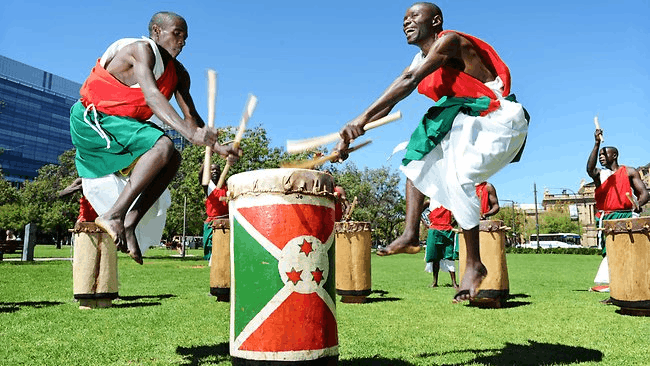
The performance begins with silence. Then, one drum speaks. Another responds. Soon, the air fills with rhythm. The drummers leap, swing, and strike with controlled strength. Their movements are both athletic and graceful, a balance that reflects the discipline of the art.
On other occasions, they often begin a procession: entering with drums balanced on their heads, carrying them with strength. There is singing and dance movements.
The set is highly synchronised. Drums, dancers, singers, sometimes poets. The drummers alternate roles: the one on the central drum, others on supporting drums, then rest, dance, etc. The energy cycles.
Some celebrate victory, others mark new beginnings. The tempo rises and falls like breathing. By the end, the audience feels not just entertained, but moved as if they’ve witnessed something ancient and human at its purest form.
The show is both physically and spiritually engaging.
Though the monarchy has long faded, the drum remains central to Burundian identity. It appears at weddings, national holidays, and public ceremonies. In 2014, UNESCO recognized the Burundian drum ritual as part of the Intangible Cultural Heritage of Humanity, ensuring global recognition for this centuries-old tradition.
But with modernization, challenges have emerged. Urban life and global pop culture are changing how young people see traditional music. Some view drumming as something from the past. Yet others — especially youth groups and cultural collectives — are finding new ways to keep it alive.
Today, drumming groups travel the world, performing in festivals and cultural exhibitions. They introduce new audiences to Burundi’s heritage while adapting the rhythms to contemporary settings. This balance between preservation and innovation is what keeps the heartbeat of Burundian culture alive.
Burundian drumming is not just about rhythm. It teaches discipline, respect, and community. Every drummer must learn to listen not just to their own drum, but to others around them. The goal is harmony, not dominance.
In many ways, that is the story of Burundi itself, a nation rebuilding through unity, guided by the rhythm of cooperation. The drums remind Burundians of shared roots and shared responsibility. They speak a language older than words: one of strength and togetherness.