
Sharon Omowayeola is teaching a generation to see clothing differently. Through her brand Shaykara, her sustainability workshops, and her collaboration with Sustainable Fashion Week UK, the Lagos-London designer is building an education-led case for slow fashion from the ground up.
By Isha Gaye
Editor in Chief, Afrique Noire Magazine
There is a photograph at the centre of Sharon Omowayeola’s work that tells you almost everything you need to know about the designer behind Shaykara: a model in one of her pieces, luminous against a pile of discarded textiles. Sharon does not have to explain the framing, because she trusts the image to do that work for her.
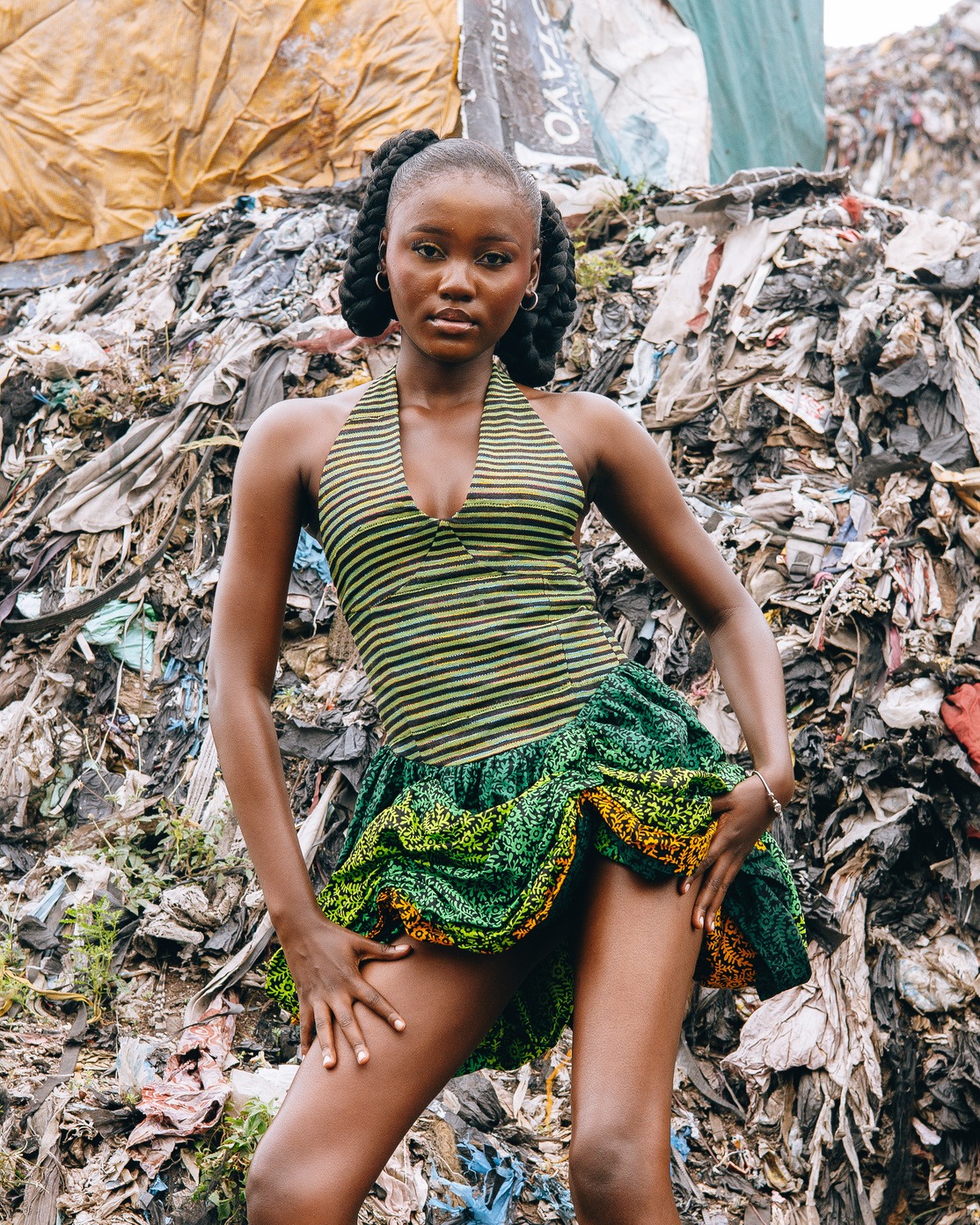
Fashion is one of the most polluting industries on the planet, and the African continent has spent decades absorbing the consequences of Western overconsumption. Sharon, a Nigerian designer based in London and the founder of Shaykarabrand, belongs to a generation of African creatives who are reading those consequences carefully and choosing to work the other way. Her practice sits at a particular intersection where she operates as designer, educator, workshop facilitator, documentary filmmaker, and researcher all at once, and while the clothes are the most visible part of what she does, they are not, in the end, the most important.
Sharon’s commitment to sustainable practice predates the brand itself. It is the soil Shaykara grew out of rather than a value bolted on after the fact. Long before she was sourcing deadstock cotton or coconut shells reclaimed from food waste, she had been thinking carefully about what fashion takes from the planet and from the communities that produce it. The brand was born during a visit to the Lomé Grand Market in Togo, where she stood inside the colour and craft of West African textile and decided to build something that honoured both the maker and the material, and that decision shaped every choice that followed: Shaykara would source responsibly, pay artisans fairly, and refuse the throwaway logic that defines so much of modern fashion.
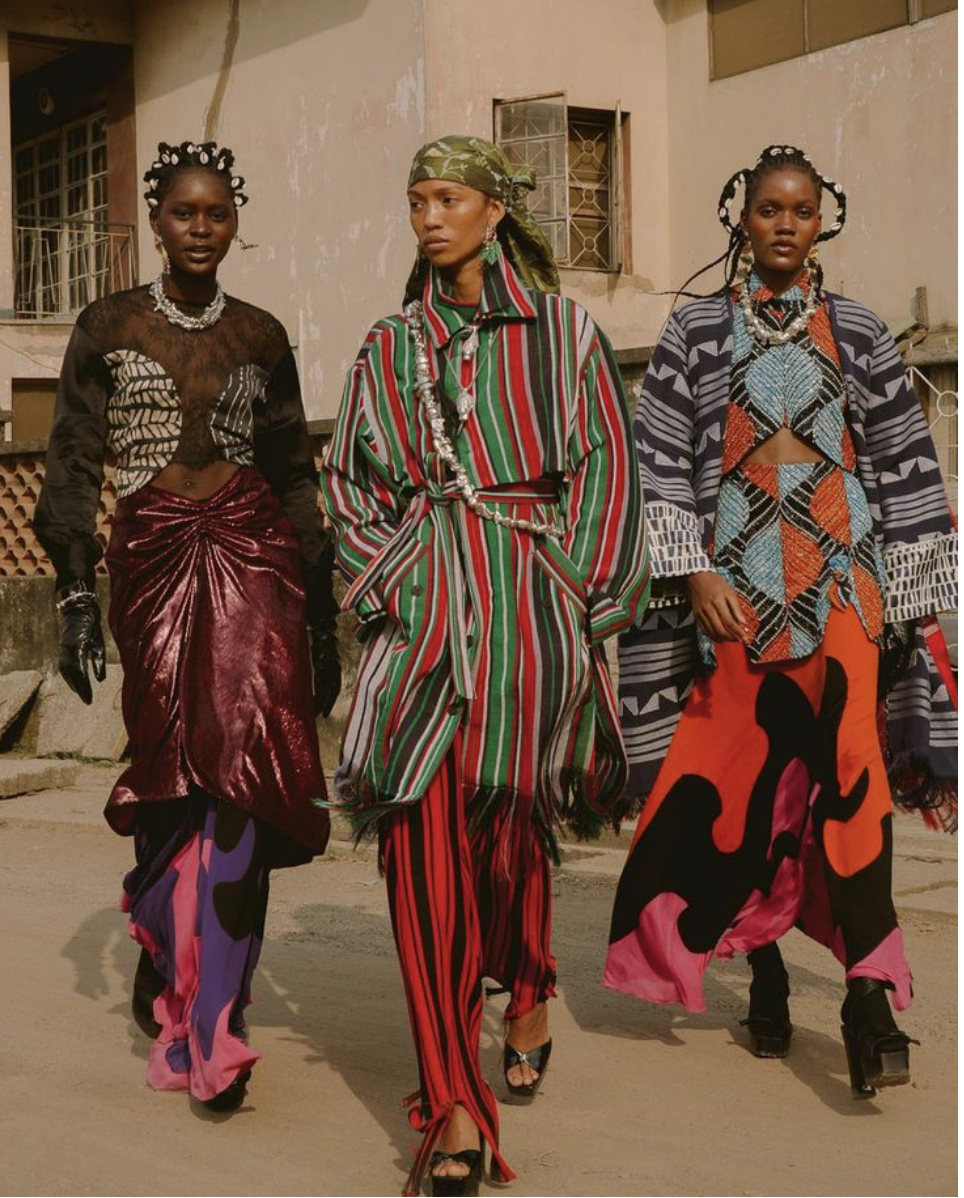
Today, the brand sources deadstock fabrics, pre-consumer offcuts, and post-consumer textile waste, working alongside Yoruba artisans for the handwoven Aso-Oke and hand-dyed Adire that anchor her collections. The garments are designed to live in a closet for years rather than weeks, and even the embellishments are deliberate, drawing on coconut shells salvaged from food waste, cowries that reference centuries of West African coastal trade, and beadwork applied by hand. Every choice is a small refusal to participate in the disposable economy, and every one of them points in the same direction.
“What’s next for me is deeper impact. Education, community-led programmes, and social responsibility.”
There is a particular argument running through Sharon’s practice, and it is the one that distinguishes her from designers who simply use sustainable materials. Waste, in her hands, is not a constraint to be apologised for but a starting point to be celebrated. The coconut shells reclaimed from food waste are not a workaround for unavailable materials; they are some of the most beautiful elements in her collection. The deadstock cotton was never a compromise; it is the foundation of pieces that have walked the runways of London Fashion Week and Africa Fashion Week Nigeria.
This is, in itself, a quiet act of cultural translation. The dominant fashion industry trains consumers to associate value with newness, with the unworn, with the freshly produced, while Sharon’s work argues the opposite, locating value instead in what has already been made, what has been salvaged, and what has been transformed. The garment becomes a proof of concept for an entire worldview, and her sustainability documentary, Worn and Reborn, which was selected for the London Fashion Film Festival, makes that argument explicit by tracing what happens to clothing after the bin and asking viewers to look more carefully at the lifecycle they are participating in.
Sharon describes the next phase of her work in three words: education, community, responsibility. The infrastructure she is building reflects that ambition. She trained at the London College of Style, completed Lhaude Africa’s Fashion Pathfinder Lab, and currently interns with the Slow Fashion Movement, where she contributes research and writes educational ebooks that walk consumers through the lifecycle of what they wear. The work is largely invisible to the public, but it functions as the scaffolding behind everything else she does.
What is more visible is her workshop practice, where Sharon has been steadily building a body of community-led work that brings the conversation about fashion waste out of editorial pages and into rooms with real participants and real garments. The premise is straightforward enough: hand people the tools, and let the act of making transform the conversation in ways that reading or listening alone cannot. That same logic, scaled up to its most ambitious expression so far, anchors her most significant piece of education work to date.
This year, Sharon partnered with Sustainable Fashion Week UK on the organisation’s Future Citizen 2026 programme, an initiative designed to put sustainability education directly into the hands of the generation whose buying habits will shape the next decade of the industry. As part of the partnership, Sharon visited two London secondary schools, Greatfields Secondary School and Heathcote School & Science College, where she ran sessions that combined real conversation about fashion waste and overconsumption with hands-on upcycling.
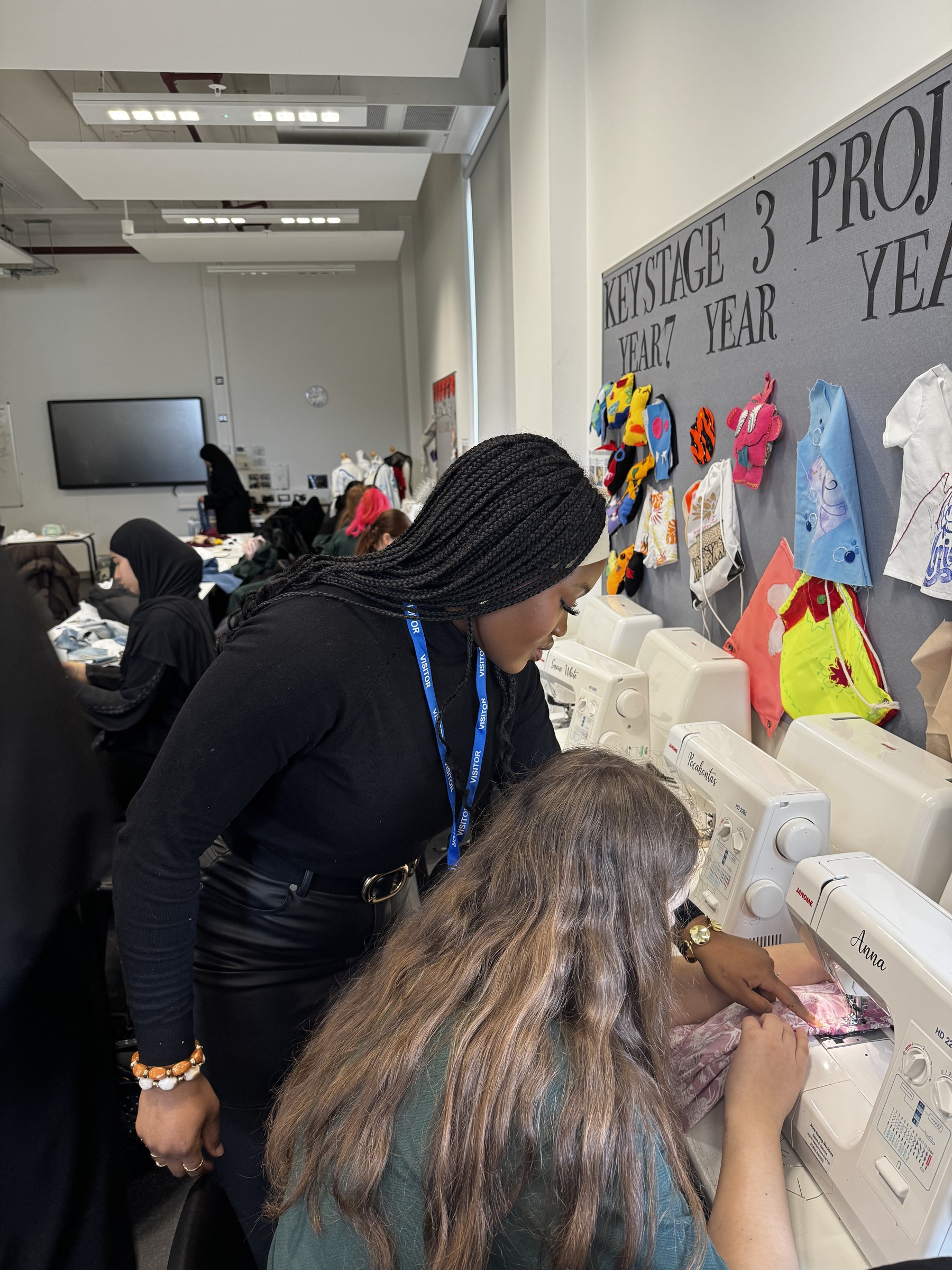
The format was simple by design. Students were invited to bring an old garment from home, something they no longer wore or were ready to discard, and learn how to transform it into something new. Sharon walked them through the conversation first, asking where their clothes come from, who makes them, what happens after they are thrown away, and why the industry depends on them buying the next thing and the next, before the scissors finally came out. The sessions were never lectures; they were practical, tactile encounters built on the assumption that critical thinking begins at the seam, and the upcycling exercises themselves were designed to encourage practical skills, critical thinking, and more responsible consumption habits over time.
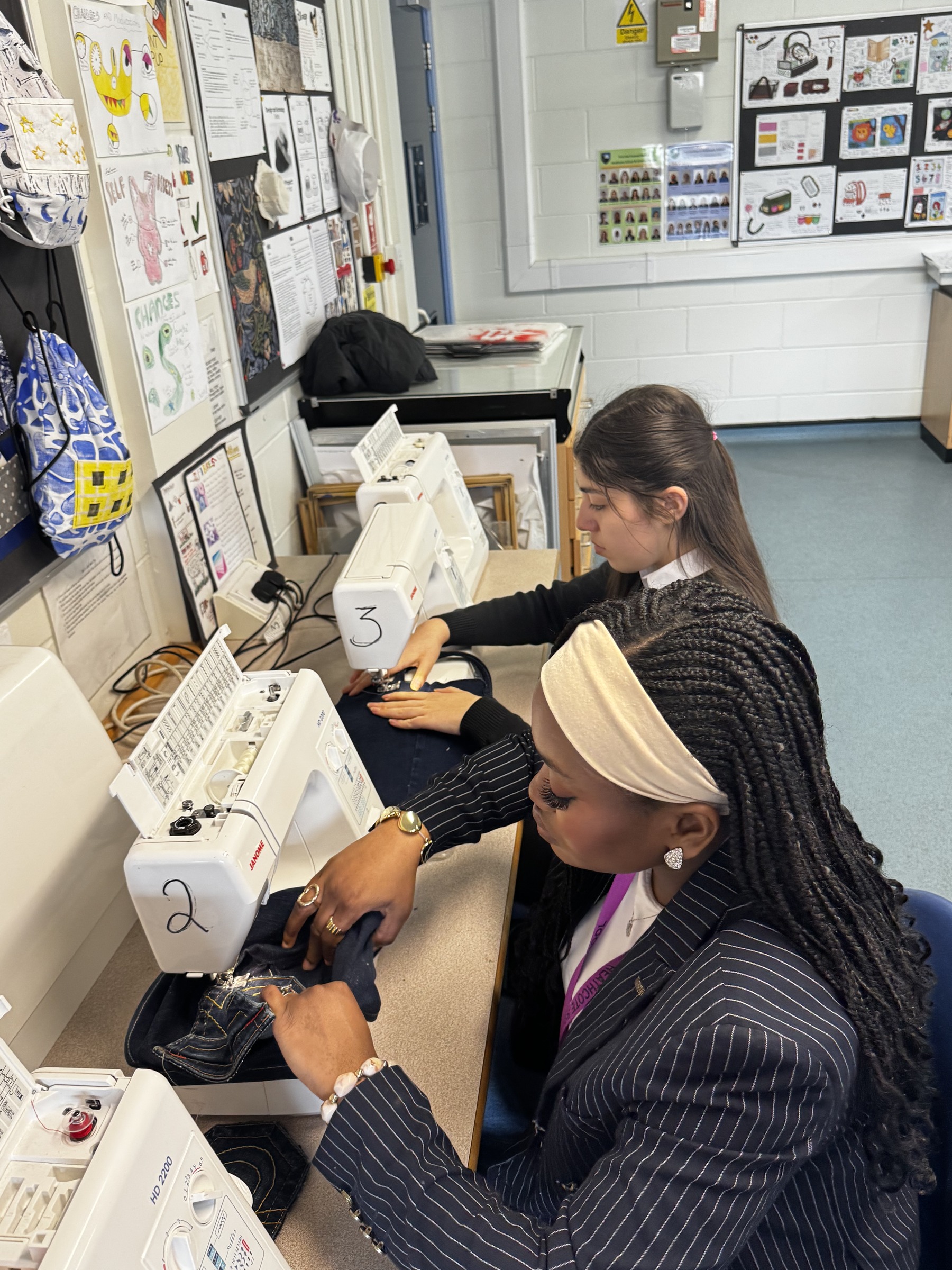
The point of Future Citizen is the long arc. The students learning to alter a hem, restitch a seam, or reimagine a piece they were once ready to throw away are the same students whose buying habits will shape the next decade of the industry, which is why Sharon is teaching them to buy less, value more, and trust their own hands. The workshops were a practical introduction to the idea that consumers possess real agency, and that the fast-fashion industry is counting on them never to discover or use it.
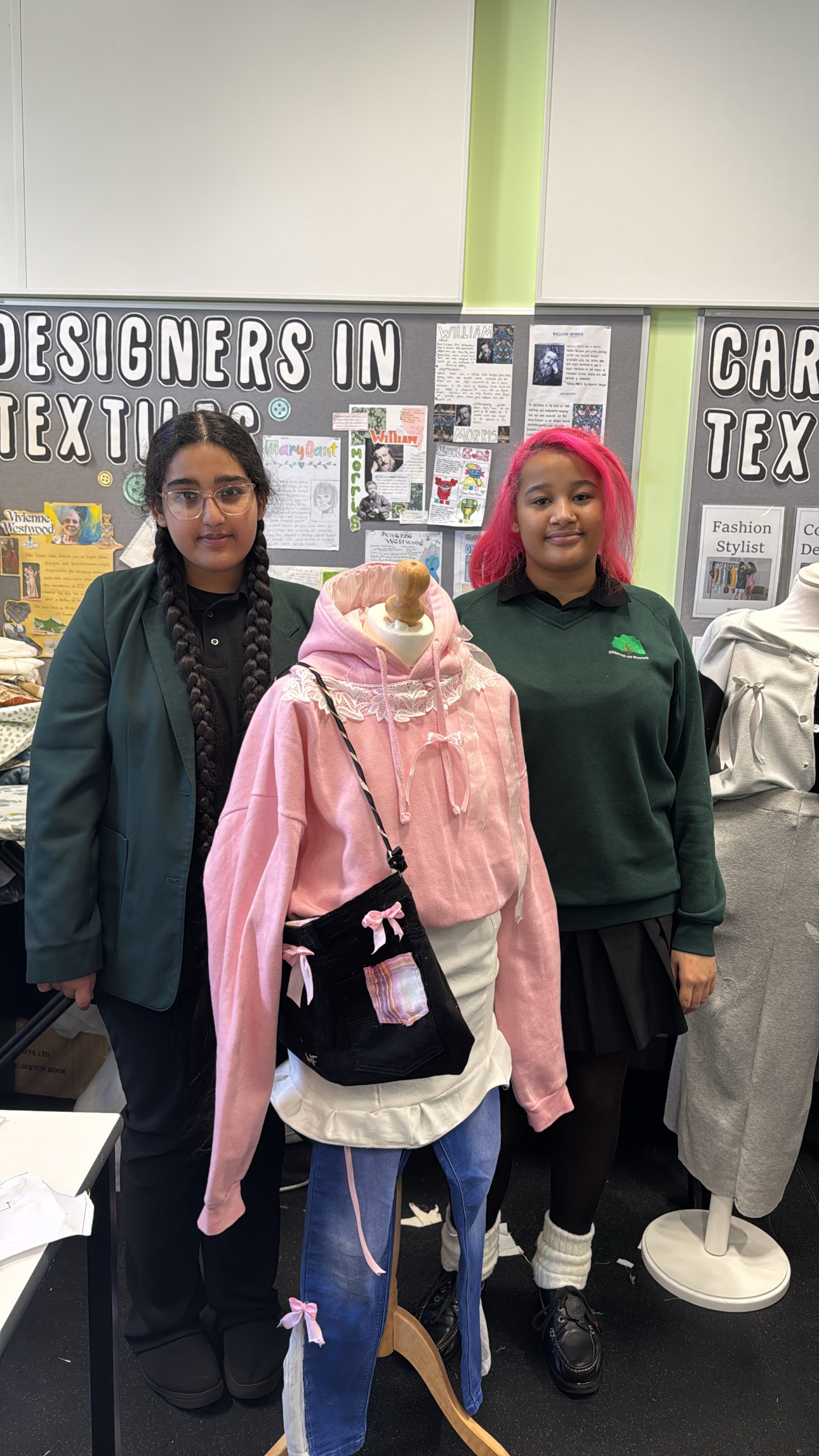
The students at Greatfields and Heathcote will not all become designers, and that was never the point of the project. They will, however, all become buyers, and the buyer who knows how to repair a garment is no longer the buyer the fast-fashion industry was counting on.
All of this sits behind the garments themselves, which carry the philosophy quietly rather than loudly. Her current collection, Sisi Ẹkó, is a love letter to the Lagos woman, drawing on hustle, humour, vulnerability, and Yoruba spiritual symbolism, and the names carry weight in equal measure. Oyin pairs a structured cotton Aso-Oke corset with a hand-beaded skirt; Iretí uses coconut shells reclaimed from food waste set against handwoven Aso-Oke and raffia; Ileke, the Adire gown, treats textile as language, with Odu Ifa motifs hand-dyed into the cotton; Adaugo, named for the Igbo Ada, the first daughter and the backbone of the family, is built around a spine-like silhouette adorned with hand-applied Igbo cultural beads; and Sekere translates the rhythm of the Yoruba percussion instrument of the same name into contour and movement.
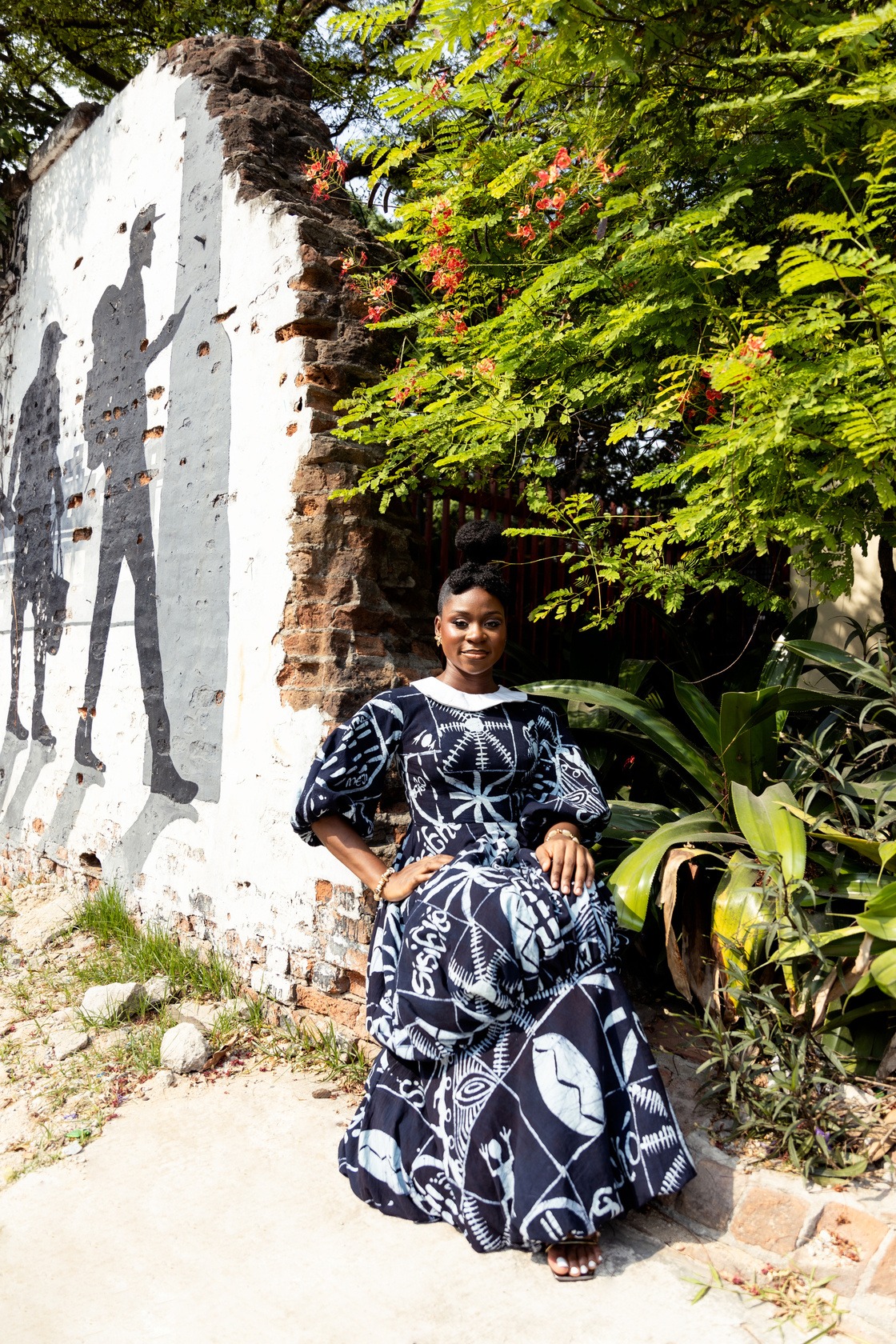
Each garment functions as a self-contained argument for the worldview underneath: the hand-dyed Adire was made by Yoruba artisans paid fairly, the deadstock cotton would have ended up in landfill, the cowries reference centuries of West African coastal trade, and the silhouettes themselves remain firmly contemporary. Every choice is deliberate, and every choice carries weight.

What makes Sharon’s practice distinctive is not the materials, though the materials are extraordinary in their own right, but rather the architecture she has built around them. She works as designer, educator, workshop facilitator, researcher, and filmmaker simultaneously, and these roles operate together as a single argument: that African creativity belongs at the centre of the global sustainable fashion conversation, and that the way to keep it there is to teach the next generation, in classrooms and community rooms alike, how to see clothing differently.
Africa is not a footnote in the global conversation about sustainable fashion; it is the conversation, and designers like Sharon Omowayeola are making sure the world hears it on Africa’s terms.
Shaykarabrand can be found on Instagram @Shaykarabrand or by email at shaykaraclothing@gmail.com.