
By: Hadassa Serrano
Noire, Fashion Journalist 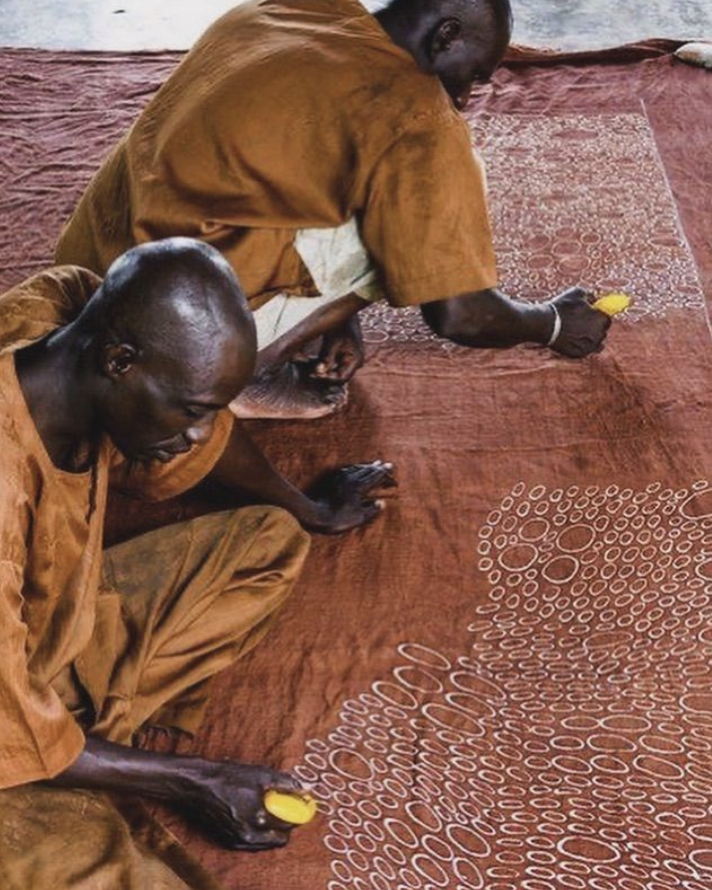
Image Source: Pinterest – traditional dyeing techniques
When craftsmanship functions as heritage, survival, and cultural memory beyond the logic of industrial production
In Africa, craftsmanship comes as a practice, almost like a daily pursuit rather than production. We learn craftsmanship from the house we grow up in, shown through simple acts such as fixing buttons from shirts when they come loose, how to stitch holes in your favorite dress instead of buying a new one, and making clothes for your dolls with Ankara fabrics torn down from your mother’s clothes. In Africa, it is very common to see ladies weaving raffia to make baskets and accessories, older men, and sometimes young ones, working as leatherworkers who make and repair shoes, and to know a particular tailor we can trust to deliver looks that correspond exactly to the design we want.
Craftsmanship in Africa has never existed solely as a commercial activity and has always been a living practice that preserves knowledge, sustains communities, and carries cultural memory across generations. When we talk about African fashion, craftsmanship is what we are mostly known for. Yet, the most beautiful part of that craft is not even the creativity that flows from it, but the practice itself: the hand that chooses to abide by the practice till it becomes an experience and inherits skills. That is the most beautiful part of African craftsmanship. The dress, the accessories, and the headgown are all the result of repetition, survival skills, and heritage, which are what define African craftsmanship.
In my own words, I would define African craftsmanship as a combination of practices, cultural inheritance, and a response to survival. Africa creates from a place of necessity and urgency, using only what’s available. Most African creations are direct responses to necessity: Calabash bowls, hand-woven baskets, everyday raffia palm mats, and handmade bead necklaces. Craftsmanship was never about producing for beauty alone, but about producing to meet daily needs with few resources, practicing crafts as a cultural inheritance.
The same approach is in fashion. African brands focus on pre-order-only production, minimizing the risk of overproduction by making pieces for daily wear that fit the wearer’s environment, lifestyle, and needs. And our craft is revealed through details: how the garment sits on the body, the making process of our local fabrics, and the creativity that comes from using limited resources to make clothing that carries meaning, beauty, and artistry.
Here, repetition is not monotonous; it is ritual. The same practice, techniques, and knowledge are transmitted from generation to generation without corrupting the craft. Fashion, then, becomes a space for artisans and fashion makers to convert their knowledge, culture, and heritage into garments that not only captivate attention for their beauty but also evoke curiosity and discovery. Think about artisans such as dyers, weavers, embroiderers, and beadworkers who have been practicing the same skills for decades, now known as heritage.
While the fashion industry sometimes relies on modernity, Africa still prioritizes the art of repetition in every stitch, garment, and creation, reminding us that craftsmanship is not about novelty but about mastering a practice till it becomes a language woven into clothing.
Till today in the 21st century, some clothing-making practices remain present:
All these practices are still used today by fashion makers and artisans, not only as a remembrance, but as a mastery of culture, heritage, and practice.
I am a firm believer that Africa is the blueprint for ecological fashion because we use only what we have to create, and we create only enough for what we need. Our crafts align with sustainability, with clothing-making practices that nuance ecology and a production rhythm that prioritizes quality over quantity. I think of the Bogolanfini fabric, one of the oldest African fabrics that stands as a reminder that African craftsmanship was often rooted in survival, where creating cloth was not simply an artistic act but a way to protect and serve everyday life.
In most African societies, craftsmanship emerged not from a desire for luxury but from the necessity of survival, adaptation, and thriving. Fashion was a tool for evolution, protection, and survival.
Passed down from generation to generation, our crafts are recognized very quickly. Through motifs, fabrics, and clothing-making techniques, African craftsmanship becomes a symbol that recalls heritage, carries stories, and exhibits our ancestors’ knowledge and practices, thereby preserving identity and history through garments. In this, no news that African fashion is mostly positioned as a cultural exhibition rather than a standard of the fashion industry. While we are fighting to rewrite that narrative, it is also important to understand that our heritage speaks louder because it combines culture, our own stories, and heritage delivered through craftsmanship, positioning us in a unique space where craftsmanship comes from within.
We are the crafters, and craftsmanship is our practice. We leave fingerprints in our creations:
Heritage is not only what was passed down to us, but also the stories and changes across generations, transforming fashion into an archive of African history and culture through craft.
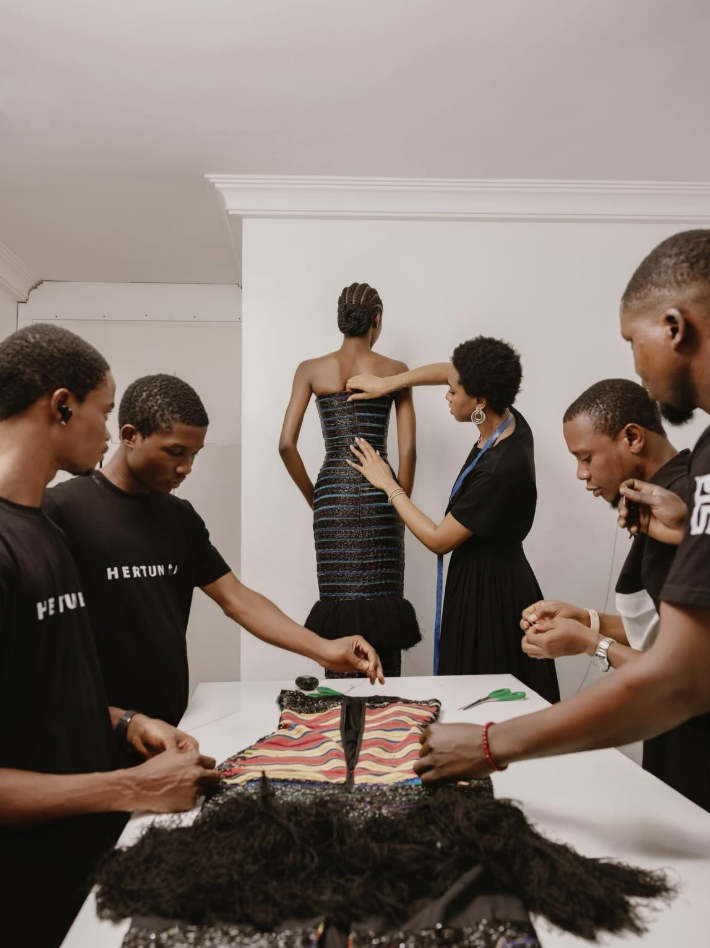 Image Source: Instagram – hertunba, woven threads VII
My favorite saying goes like this: “Fashion is soulless without hands.” My biggest fashion argument of all time is that fashion exists only because of the hands behind the garments and the stitches. Clothing is created to be worn by humans, designed for human bodies, and inspired by human figures and by dressing humans in different aspects and contexts. But sometimes, the wearer gets more attention than the maker.
As I like to call them, fashion makers are those who build the fashion industry, and in Africa, those hands are often unsung and unnoticed. They stitch quietly in their small atelier. They weave in their veranda during the day. They embroider for hours with so much passion, and most of the time they are barely known or credited when the work is done. I would like to highlight the effort and massive contributions of our African weavers, textile makers, artisans, leatherworkers, tailors, visionary designers, and local workforces who make craftsmanship look easy when, in reality, it is rooted in discipline, repetition, and dedication.
Because fashion doesn’t start on runways. It starts in ateliers where people sit for too long stitching and embroidering, in that one old lady’s house where she still practices dyeing for designers, and in that artisan’s backyard where he offers shoe-making services. The hands behind collections, runway shows, artistic garments, and designers’ names are the unsung heroes whose craftsmanship sustains fashion culturally and economically.
Here come those who birth concepts, thoughts, and conversations, those who shape mentality and society through fashion. Designers are more than humans who design; they convert ideas, thoughts, and messages into visual storytelling while creating garments that transcend utility to convey symbolism, serve as communication tools, and embellish the body. Their impact transcends creating beautiful garments; they enable artisans to showcase their work and preserve African heritage through their creations. They are like mediators between culture and crafters, heritage and the present, stories and people. They don’t just make fashion; they reclaim heritage and narrative.
Currently, the fashion industry in Africa has many faces that do more than designing and creating:
In a world that recalls fashion through trends, I believe craftsmanship and the hands behind the garments are the unsung heroes who deserve recognition. African craftsmanship is a story of hands, practices, techniques, heritage, and survival skills. Let’s embrace the richness of our craftsmanship while working toward reshaping its position and meaning in the African fashion space.