
The first thing to understand about collecting African art, before any conversation about platforms or pricing or provenance, is that the decision to collect is a creative act in itself, one that places you in a relationship with an artist’s work that is different from the relationship you have with anything else you own, because a work of art is not a possession in the ordinary sense but an ongoing presence in your space that changes how you see the room it hangs in, and that changes you, in ways that are hard to predict, over the years you spend with it.
The Art Basel and UBS Global Collecting Report noted in 2025 that 46 percent of online art sales were made to first-time collectors, and that younger collectors were showing the strongest interest in African and African diaspora artists, which means that the moment for this guide is not hypothetical but actual: there is a generation of Black and African collectors who have the resources and the desire to begin, and who have not had a guide written for them that starts from where they actually are rather than from the world of Sotheby’s and Christie’s evening sales that most art collecting literature assumes as its context.
This guide starts from where most first-time collectors actually are: some money available, real uncertainty about where to start, a genuine feeling that African art belongs in the spaces they live in and that the walls of their homes should reflect the creative world they believe in, and no particular desire to become an art world insider before they can buy a painting they love. That is enough to begin, and beginning is the only part that requires courage.
The best collectors are not always the biggest spenders. They are the most intentional — people who buy what genuinely moves them and who give themselves enough time to understand what that is before they spend money on something they are not sure about.
The first practical step, before any purchase, is to look at a great deal of African art in as many contexts as you can access without spending anything, because the act of looking, sustained over months, is what develops the eye that eventually makes collecting feel confident rather than arbitrary. Online, this means using platforms like Artsy, which aggregates listings from hundreds of galleries internationally and includes a significant range of African and African diaspora artists, and following galleries that specialise in African art on Instagram, where the DM has become, according to a 2025 report, the purchase mechanism for 70 percent of Gen Z collectors, which tells you something both about where the market is going and about how accessible direct relationships with artists and gallerists have become.
Galleries and platforms that focus specifically on African art and have earned reputations for artist integrity, clear provenance documentation, and genuine investment in collector education include Tiwani Contemporary, which has spaces in London and Lagos and works with a serious roster of contemporary African artists; Mariane Ibrahim, whose Chicago and Paris galleries have championed artists including Amoako Boafo and Gosette Lubondo; ArtHouse Nigeria, which is building a regional auction and collecting infrastructure in Lagos; Aspire Art, which is doing similar infrastructure work in South Africa; and the 1-54 Contemporary African Art Fair, which has editions in London and Marrakech and is one of the most accessible entry points into the contemporary African art market for collectors who want to see a wide range of work in a single context.
ArtNet provides auction records that allow you to track what specific artists’ work has sold for over time, which is useful not because the price should determine what you buy, but because understanding how a market values a body of work helps you understand whether you are buying something with room to grow, something already at its ceiling, or something whose market has not yet developed the infrastructure to reflect its actual significance, which is the situation that the Harvard-trained art market analyst has described as the fundamental condition of African art: culturally significant, globally desired, but priced in a system that is still catching up to what the work is worth.
African art auctions generate approximately $72 million annually, which is roughly 0.1 percent of the global art market’s $67.8 billion. The gap between the cultural prestige of African art and its market valuation is not a reflection of quality. It is a reflection of infrastructure, and infrastructure is exactly the kind of thing that changes as collectors change the market by taking it seriously.
Provenance is the word used in the art world to describe the documented history of a work: where it was made, who made it, where it has been, who has owned it, and what exhibition or publication history it carries. For African art, provenance carries an additional weight that is both ethical and financial, because the continent’s history of colonial looting means that a significant portion of African cultural objects held in museums and private collections outside the continent were acquired through processes that would not survive legal scrutiny today, and because the ongoing restitution debate, which saw the Netherlands return 119 Benin Bronzes to Nigeria in 2025 and the African Union declare 2025 the Year of Cultural Heritage and Reparations, has raised the ethical stakes of owning African objects whose provenance is unclear.
When you buy from a reputable gallery, the provenance documentation comes with the work as a standard part of the transaction, including the certificate of authenticity, the artist’s statement, and the exhibition history of the specific piece. When you buy directly from an artist, as many first-time collectors do and as the Instagram DM culture makes increasingly straightforward, you should still ask for documentation of the work: a photograph of the artist with the piece, a signed statement of authenticity, and any available record of where the work has been shown. This documentation matters even for entry-level purchases, because it protects the integrity of your collection and it protects the artist’s relationship to their own work as it moves through the world.
The question of budget is the one that most guides handle either too vaguely or not at all, so this guide will be specific. Prints by emerging African artists, which are limited edition reproductions of an original work made in partnership with the artist and authenticated by them, typically sell in the range of $100 to $800 depending on the edition size and the artist’s profile, and they are a genuinely valuable entry point into collecting because they allow you to live with an artist’s visual language without committing to the price of an original. Originals by emerging artists, meaning people who are within the first five to ten years of their professional practice and who do not yet have significant institutional recognition, typically sell between $500 and $5,000 depending on medium, size, and the gallery representing them, and this is the range where the most interesting collecting decisions happen, because the artists working in this range include people whose work will be in museum collections in twenty years and people whose work will not, and the only reliable way to know the difference is to know the work deeply rather than to follow the market signals.
One practical approach that the most experienced collectors recommend is to allocate a specific amount per year to collecting, to make one or two purchases per year rather than many, and to give yourself a waiting period between seeing a work and buying it, because the works that still feel necessary after two weeks are the ones worth owning, and the ones that feel less urgent at the end of a waiting period were probably not the right purchase anyway. An installment arrangement, which many galleries and artists are willing to make when asked, spreads the cost of a purchase of $800 or more over three or four months and makes an original work financially accessible at a point in a collecting practice where it might otherwise be out of reach.
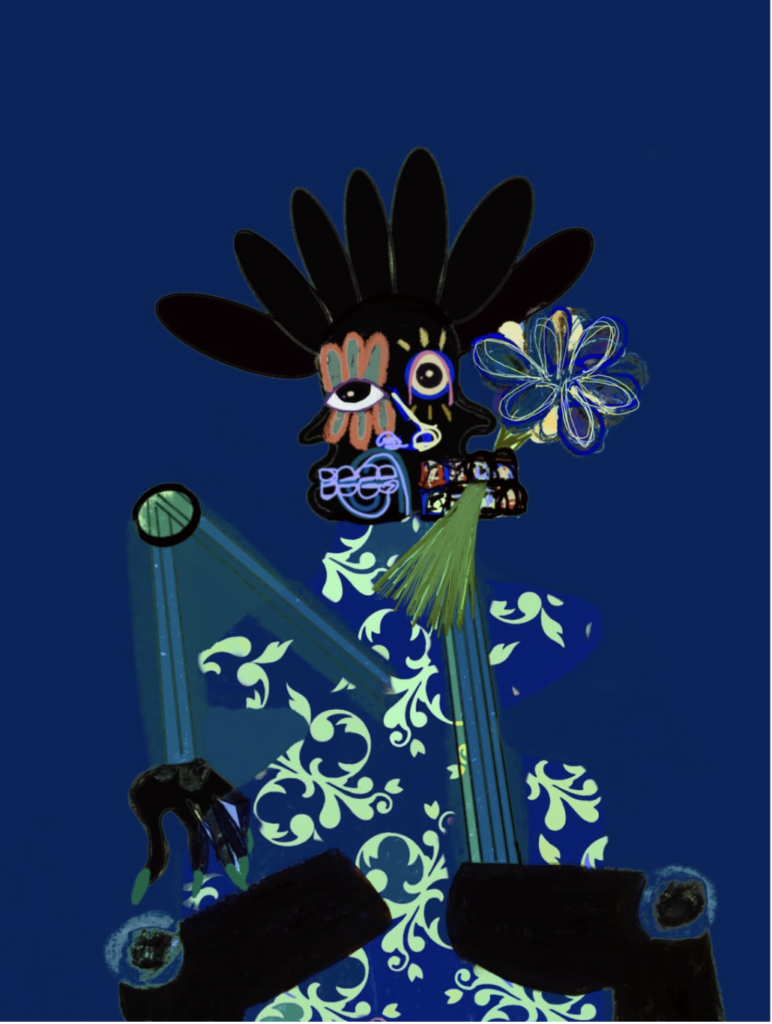
The reason to start is not investment, though African art at every market tier has shown resilience over the past five years in ways that have genuinely surprised analysts who expected the category to remain undervalued indefinitely, and the growing institutional visibility of African artists, including Koyo Kouoh’s appointment as the first African woman to curate the Venice Biennale in 2026, is slowly building the infrastructure of recognition that the market follows. The reason to start is that the walls of your home are a form of autobiography, and that the artists making work about African identity, memory, ceremony, beauty, and political life right now are doing some of the most urgent creative work being made anywhere, and that work deserves to live in spaces that belong to people who understand what it is saying.
By Isha Gaye